

Table of Contents
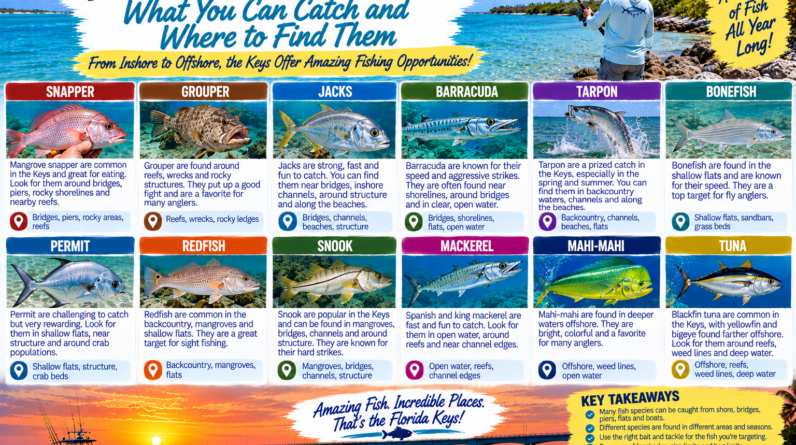
Florida Keys Fish Species: What You Can Catch and Where to Find Them
Florida Keys fish species range from small reef fish you can catch with a shrimp to tarpon weighing well over 100 pounds.
That variety is one of the biggest reasons people travel to the Keys specifically to fish.
You can chase mahi-mahi offshore in the morning, catch snapper on the reef, look for bonefish on a shallow flat, or throw a bait beside a bridge and have no idea what is going to eat it.
But not every Florida Keys fish species lives in the same water or bites during the same part of the year.
Knowing what you want to catch can help you choose:
- Where to stay
- When to visit
- What type of charter to book
- Whether you need a boat
- What tackle to bring
- How much time to allow
Here are some of the major fish you may encounter during a Florida Keys fishing trip.
Florida Keys Fish Species at a Glance
Some of the best-known Florida Keys fish species include:
- Tarpon
- Mahi-mahi
- Sailfish
- Blackfin tuna
- Wahoo
- King mackerel
- Yellowtail snapper
- Mangrove snapper
- Mutton snapper
- Grouper
- Bonefish
- Permit
- Snook
- Barracuda
- Sharks
- Cobia
- Amberjack
- Blue marlin
- Swordfish
You will not find all of them in the same place.
The fishing can be divided into several broad environments.
Offshore
Possible species include:
- Mahi-mahi
- Blackfin tuna
- Wahoo
- Sailfish
- Marlin
- Swordfish
Reefs and Wrecks
Possible species include:
- Yellowtail snapper
- Mangrove snapper
- Mutton snapper
- Grouper
- Amberjack
- Barracuda
- Sharks
- King mackerel
Flats and Backcountry
Possible species include:
- Tarpon
- Bonefish
- Permit
- Snook
- Barracuda
- Sharks
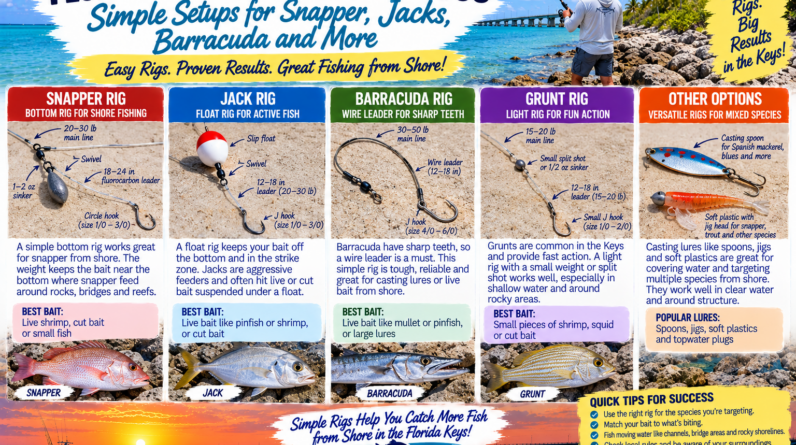
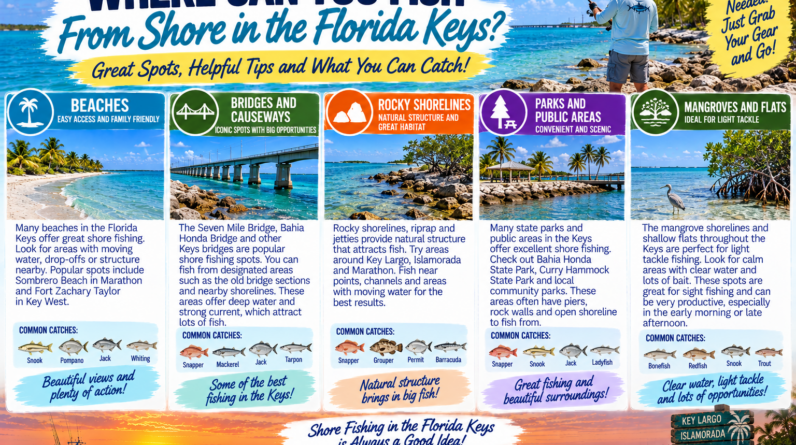
Bridges and Shore
Possible catches can include:
- Mangrove snapper
- Jacks
- Barracuda
- Tarpon
- Sharks
- Grunts
- Mackerel
- Other passing fish
That is why choosing the fishing style can be just as important as choosing the species.
Tarpon
Tarpon are one of the fish most strongly associated with the Florida Keys.
They are large.
They jump.
They make long runs.
And they can turn a calm fishing trip into chaos very quickly.
Tarpon can be caught around:
- Bridges
- Channels
- Bays
- Flats
- Harbors
- Backcountry water
- Nearshore areas
Spring and early summer are particularly well known for tarpon fishing, although tarpon can be encountered at other times of year.
If tarpon are the main reason for your trip, tell the captain before booking.
A dedicated tarpon trip can be very different from a general reef or offshore charter.
Can You Keep Tarpon?
For ordinary recreational fishing, think of tarpon as a catch-and-release species.
Florida heavily protects them.
That means the goal is the fight, photo, and release rather than bringing one back for dinner.
Always check current FWC regulations before your trip because handling and harvest rules can change.
Mahi-Mahi
Mahi-mahi are one of the most popular offshore Florida Keys fish species.
You may also hear them called dolphin or dolphinfish.
They have nothing to do with marine mammals.
Mahi are fast-growing offshore fish known for:
- Bright colors
- Hard fights
- Acrobatic jumps
- Excellent table quality
They are often found around:
- Floating weed
- Debris
- Current edges
- Temperature breaks
- Birds
- Schools of bait
Warmer months are generally associated with strong mahi fishing in the Keys.
How Do You Catch Mahi-Mahi?
Common methods include:
- Trolling
- Casting around floating structure
- Live baiting
- Pitching bait to visible fish
Finding the fish is often the biggest part of the job.
A captain may cover a lot of water searching for birds, weed lines, floating debris, or other signs of life.
That is one reason a full-day offshore charter can make more sense if mahi are your main target.
Sailfish
Sailfish are another signature Florida Keys game fish.
They are known for:
- Speed
- Jumps
- Long runs
- Their large dorsal sail
The cooler part of the year is particularly well known for sailfish fishing in the Keys.
Cold fronts can push bait and create conditions that experienced captains watch closely.
Islamorada, Key Largo, Marathon, and Key West can all provide sailfish opportunities depending on conditions.
Are Sailfish Good for Beginners?
They can be.
You do not need years of fishing experience to catch one on a charter.
The captain and mate can handle the complicated parts.
You need to listen carefully once a fish is hooked.
Things can happen quickly.
Blackfin Tuna
Blackfin tuna are found offshore throughout the Florida Keys.
They are smaller than the giant bluefin tuna people see on television, but they are still strong fish.
They are also excellent eating.
Blackfin tuna are commonly associated with:
- Offshore humps
- Current edges
- Bait concentrations
- Deep-water structure
You may catch them while trolling, live baiting, or using other offshore techniques.
Islamorada Humps and Tuna Fishing
The offshore humps near Islamorada are famous fishing areas.
These underwater rises create current and attract bait.
That can bring tuna and other predators into the area.
Humps are not guaranteed fish factories.
Current, bait, weather, pressure, and season still matter.
But they are an important part of offshore fishing in the Upper and Middle Keys.
Wahoo
Wahoo are built for speed.
They have long bodies, sharp teeth, and explosive strikes.
Cooler months can provide strong wahoo opportunities, although they can be caught at other times.
Wahoo may be targeted around:
- Offshore structure
- Current edges
- Drop-offs
- Wrecks
- Floating debris
High-speed trolling is one technique associated with wahoo fishing.
If you catch one, keep your hands away from the mouth.
Those teeth are not decorative.
King Mackerel
King mackerel, commonly called kingfish, are another fast-moving predator.
They can be found around:
- Reefs
- Wrecks
- Bait schools
- Offshore edges
Cooler months often bring good kingfish opportunities to South Florida and the Keys.
Live baiting and trolling are common techniques.
Like wahoo and barracuda, kingfish have very sharp teeth.
Leader choice matters.
Yellowtail Snapper
Yellowtail snapper may be one of the best Florida Keys fish species for someone who wants action and a fish they may be able to take home for dinner.
They are strongly associated with reef fishing.
A yellowtail trip often involves:
- Anchoring near the reef
- Creating a chum line
- Fishing light tackle
- Drifting bait back naturally
Clear water can make yellowtail surprisingly challenging.
Heavy tackle may get fewer bites.
Are Yellowtail Snapper Good to Eat?
Yes.
Yellowtail snapper are one of the popular table fish caught in the Keys.
You still need to follow current:
- Size limits
- Bag limits
- Fishing regulations
Your captain should know what can legally be kept that day.
Mangrove Snapper
Mangrove snapper are found in a much wider range of places.
You may catch them around:
- Mangroves
- Bridges
- Piers
- Reefs
- Wrecks
- Docks
- Rocky structure
That makes them one of the more accessible Florida Keys fish species.
You do not necessarily need an offshore charter to catch one.
They are also notorious for heading directly into structure once hooked.
Give a good mangrove snapper too much line beside a piling and the fight may end quickly.
Mutton Snapper
Mutton snapper are another prized Florida Keys catch.
They can be caught around:
- Reefs
- Wrecks
- Deeper structure
- Sand areas near reef systems
They can grow much larger than the yellowtails most visitors encounter.
A big mutton snapper is a serious fish.
They are also highly regarded as table fare.
Grouper
Several grouper species can be encountered around the Florida Keys.
Possible species include:
- Black grouper
- Red grouper
- Gag grouper
- Scamp
- Other grouper species
They are commonly associated with:
- Reefs
- Wrecks
- Rocks
- Ledges
- Bottom structure
A hooked grouper often has one goal.
Get back into the hole.
That is why grouper tackle tends to be heavier than what you might use for yellowtail snapper.
Grouper Regulations Need Special Attention
Do not assume that catching a grouper means you can keep it.
Grouper regulations can involve:
- Species-specific seasons
- Minimum sizes
- Bag limits
- Area-specific rules
- Seasonal closures
Those rules can change.
Always check the current FWC regulations rather than relying on an older fishing article.
Bonefish
Bonefish are one of the classic shallow-water Florida Keys fish species.
They live around:
- Flats
- Shallow bays
- Seagrass
- Sand
- Mangrove areas
They are not enormous compared with tarpon.
That does not make them easy.
Bonefish are famous for making extremely fast runs once hooked.
They can also be difficult to see.
Sight Fishing for Bonefish
A lot of bonefish fishing involves spotting the fish first.
Anglers look for:
- Tails
- Wakes
- Mud
- Shadows
- Fish moving across sand
Polarized sunglasses help enormously.
A flats guide may pole the boat quietly while looking for fish.
You may get one good shot.
Make it count.
Can You Catch Bonefish Without a Boat?
Yes.
Wading can put you within reach of bonefish on accessible flats.
It takes patience, stealth, and legal access.
Our Florida Keys Wading Fishing guide covers fishing flats on foot.
Permit
Permit are another prized flats species.
They are powerful, wary, and capable of making anglers question every fishing decision they have ever made.
Permit may be found around:
- Flats
- Channels
- Wrecks
- Reefs
- Deeper structure
Crabs are a classic permit bait.
Artificial lures and flies can also be used.
Why Are Permit So Difficult?
They have excellent eyesight and can be extremely cautious in shallow water.
You may spend a lot of time looking for one.
Then make one cast.
Then watch the fish disappear.
That is normal permit fishing.
The challenge is part of the appeal.
Snook
Snook are more commonly associated with inshore Florida than offshore Keys fishing.
They can be found around:
- Mangroves
- Shorelines
- Channels
- Docks
- Backcountry water
They are strong fighters and can strike both live bait and artificial lures.
Snook harvest regulations are highly specific.
Check the current season, size limits, and permit requirements before keeping one.
Barracuda
Barracuda are everywhere in the Florida Keys fishing conversation.
You may encounter one:
- On a reef
- Beside a bridge
- Over a flat
- Around a wreck
- Near mangroves
- While reeling in another fish
They have incredible acceleration and extremely sharp teeth.
They can also provide excellent light-tackle action.
Barracuda Sometimes Find You
You do not always need to target them.
Hook a smaller snapper around a bridge and suddenly a barracuda may appear.
One second you have a snapper.
The next you have half a snapper.
It happens.
Sharks
The Florida Keys have many shark species.
Depending on where and how you fish, possibilities can include:
- Nurse sharks
- Lemon sharks
- Blacktip sharks
- Bull sharks
- Hammerheads
- Other species
Some anglers specifically book shark trips.
Others hook sharks while targeting something completely different.
Shark Regulations Are Different
Many shark species are protected.
Shore-based shark fishing also has additional Florida requirements, including a required permit for anglers age 16 and older who intentionally target sharks from shore.
Do not target sharks without reading the current FWC rules.
Check current Florida shark fishing regulations
Cobia
Cobia are powerful fish that may be found around:
- Rays
- Sharks
- Buoys
- Wrecks
- Floating objects
- Offshore structure
They can sometimes be spotted near the surface.
Seeing a cobia and getting it to eat are two different things.
Live bait and artificial lures can both work.
Amberjack
Amberjack are strong reef and wreck fish.
Really strong.
They live around deeper structure and can make brutal runs once hooked.
If you want a fish that tests your arms, an amberjack can handle that assignment.
Heavy tackle is usually required.
Swordfish
Swordfish are among the more specialized Florida Keys fish species.
This is not casual bridge fishing.
Swordfish live in very deep water.
Modern daytime swordfishing often involves dropping bait hundreds or even thousands of feet into deep offshore water.
Specialized tackle and experienced crews make a huge difference.
If catching a swordfish is a bucket-list goal, look specifically for a charter that offers swordfish trips.
Blue Marlin
Blue marlin are possible in offshore Florida Keys waters.
They are not something you should expect to catch on an ordinary half-day fishing trip.
Marlin fishing normally involves:
- Offshore water
- Serious tackle
- Significant travel
- A lot of patience
Catching one can be the fish of a lifetime.
But if your family mainly wants steady action, a marlin-focused plan probably is not the best first charter.
Which Florida Keys Fish Species Are Best for Beginners?
For someone new to saltwater fishing, I would prioritize action rather than prestige.
Possible beginner-friendly targets include:
- Snapper
- Jacks
- Grunts
- Mackerel
- Smaller reef species
A reef trip can be a great first charter because several people may get chances to catch fish.
A child who catches six snapper may have more fun than someone who spends six hours waiting for one sailfish.
If this is your first trip, read our Florida Keys Fishing Charters for Beginners.
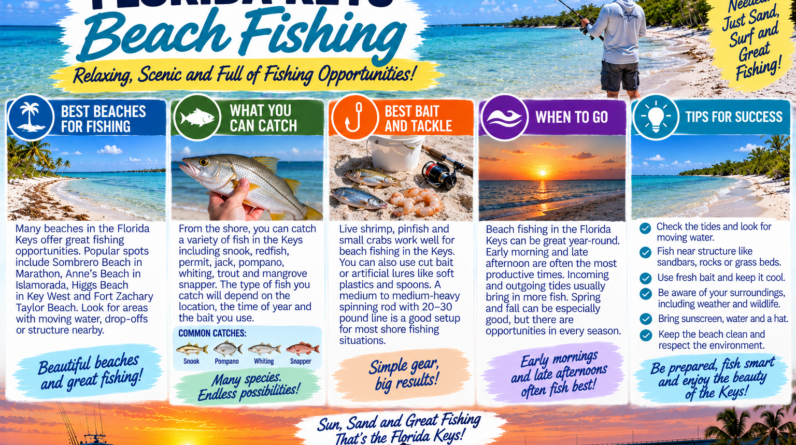
Which Florida Keys Fish Species Can You Catch From Shore?
You do not need a boat for every fish.
Possible land-based catches include:
- Mangrove snapper
- Jacks
- Barracuda
- Tarpon
- Sharks
- Mackerel
- Grunts
- Snook
- Other inshore species
Your odds depend heavily on location, season, tide, and access.
Start with our Florida Keys Fishing Spots From Shore guide.
Which Florida Keys Fish Species Are Best to Eat?
Popular table fish can include:
- Yellowtail snapper
- Mangrove snapper
- Mutton snapper
- Mahi-mahi
- Blackfin tuna
- Wahoo
- Grouper when legal
- King mackerel for anglers who enjoy it
Taste is personal.
Legality is not.
Always check current regulations before keeping fish.
Our Can You Keep the Fish You Catch on a Florida Keys Charter? guide explains the basics.
Which Fish Are Usually Catch and Release?
Some Florida Keys fishing is much more focused on sport than dinner.
That includes species such as:
- Tarpon
- Bonefish
Permit can also be heavily catch-and-release oriented, although harvest rules differ and the Florida Keys Special Permit Zone has specific seasonal and size restrictions.
Many anglers also release:
- Sailfish
- Marlin
- Large sharks
- Barracuda
Even if harvest is legal, you do not have to keep a fish.
What Florida Keys Fish Species Can You Catch Each Month?
This is where trip planning gets much easier.
Different fish tend to have stronger seasonal windows.
Broadly:
Winter
Think:
- Sailfish
- Wahoo
- Kingfish
- Blackfin tuna
- Snapper
Spring
Think:
- Tarpon
- Permit
- Blackfin tuna
- Mahi beginning to increase
- Snapper
- Reef fish
Summer
Think:
- Mahi-mahi
- Tarpon
- Bonefish
- Permit
- Snapper
- Grouper when legal and in season
- Offshore species
Fall
Think:
- Mahi during part of the season
- Bonefish
- Permit
- Snapper
- Blackfin tuna
- Wahoo beginning to become more interesting
- Sailfish opportunities increasing as conditions cool
These are general fishing patterns, not guarantees.
For a month-by-month breakdown, use our Florida Keys Fishing Calendar.
Where Should You Stay Based on What You Want to Catch?
You can catch many of these species throughout the Keys.
But different areas give you different advantages.
Key Largo
Good access to:
- Offshore fishing
- Reef fishing
- Wrecks
- Florida Bay
- Backcountry
Read the Key Largo Fishing Guide.
Islamorada
Especially useful if you want access to multiple fishing environments from one base.
Possible targets include:
- Tarpon
- Bonefish
- Permit
- Sailfish
- Mahi
- Tuna
- Snapper
- Grouper
Read the Islamorada Fishing Guide.
Marathon
Good access to:
- Reefs
- Wrecks
- Offshore fishing
- Bridges
- Backcountry
- Florida Bay
Read the Marathon Fishing Guide.
Key West
Offers access to:
- Offshore fishing
- Reefs
- Wrecks
- Flats
- Backcountry
Read the Key West Fishing Guide.
Do Not Choose Your Trip Based on One Instagram Photo
This is worth remembering.
A captain posted a giant mahi yesterday.
That does not mean you are guaranteed a giant mahi tomorrow.
Fish move.
Weather changes.
Current changes.
Bait moves.
The best plan is usually to tell the captain what you would like to catch and ask what gives you the best realistic opportunity during your dates.
Sometimes the best fishing plan is not the one you had before arriving.
Pick the Fish First, Then Plan the Trip
If there is one Florida Keys fish species you really want to catch, start there.
Then figure out:
- Best time of year
- Best part of the Keys
- Best fishing style
- Best trip length
- Whether you need a private charter
- What current regulations apply
If you simply want to experience Florida Keys fishing, stay flexible.
Tell the captain:
“We want to catch fish and have a good day. What would you recommend?”
That can be one of the smartest things you say all vacation.
Plan Your Florida Keys Fishing Trip
Start with the Florida Keys Fishing Calendar if your travel dates are flexible.
If you are planning to hire a captain, compare Florida Keys Fishing Charter Costs before setting your budget.
And if you want to fish part of the trip on your own, use our Florida Keys Fishing Without a Boat guide.
d