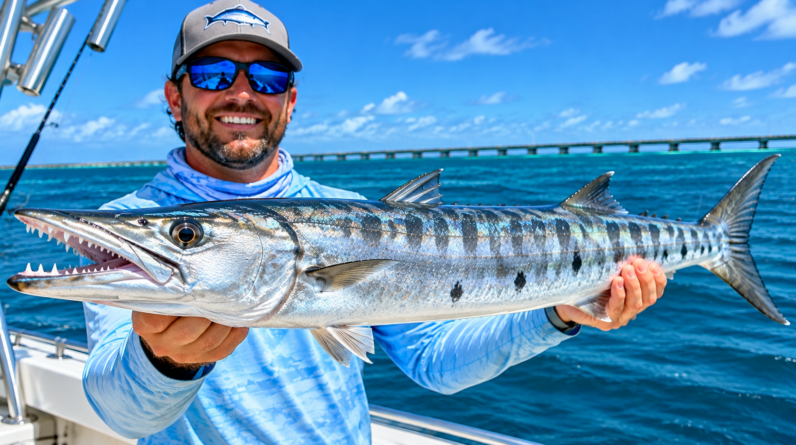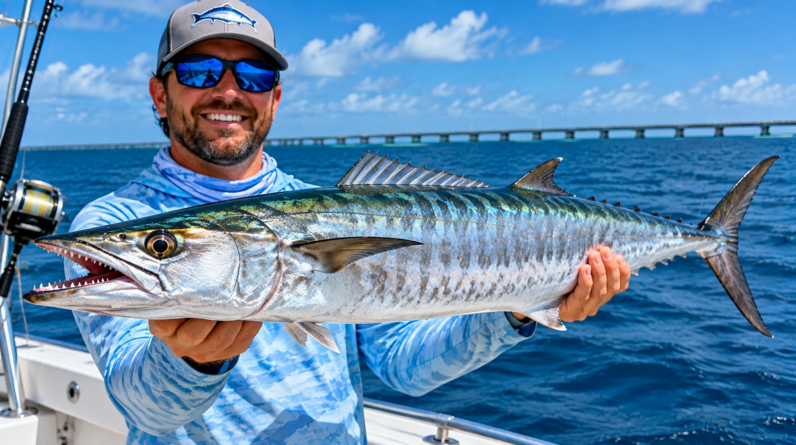


Florida Keys yellow jack fishing is a fun option when you want a hard-fighting fish without running far offshore. Yellow jack are a fun target when you want a hard-fighting fish without running far offshore. You can find them around reef edges, wrecks, channels and bait schools throughout the Florida Keys.
They hit live bait and artificial lures, fight hard on spinning tackle and can make a great addition to a mixed-species trip.
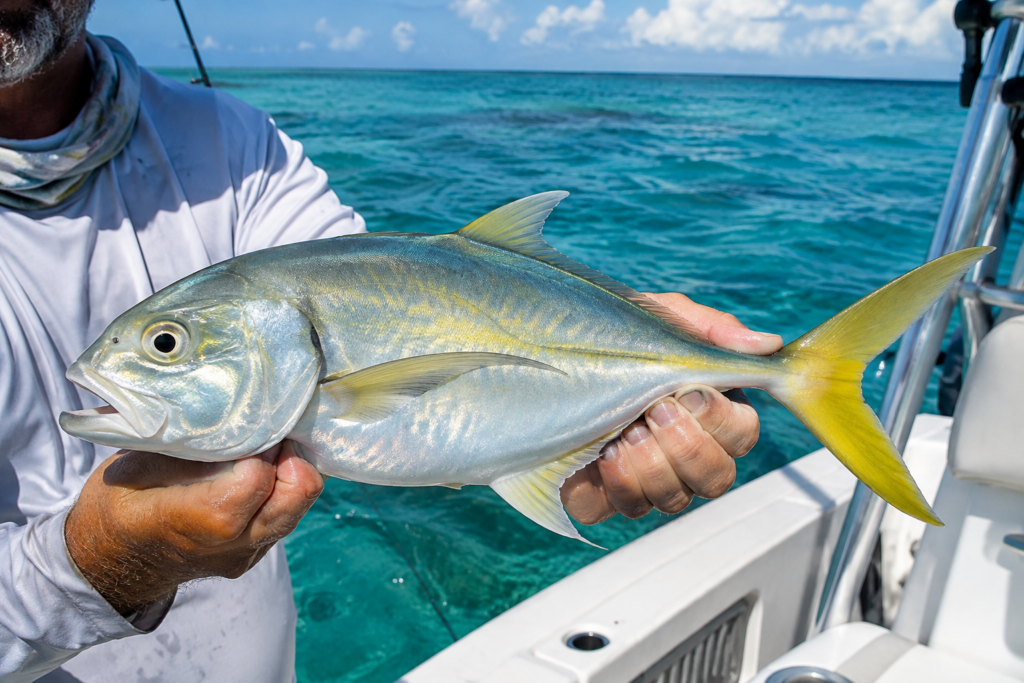
Table of Contents
How to Identify a Yellow Jack
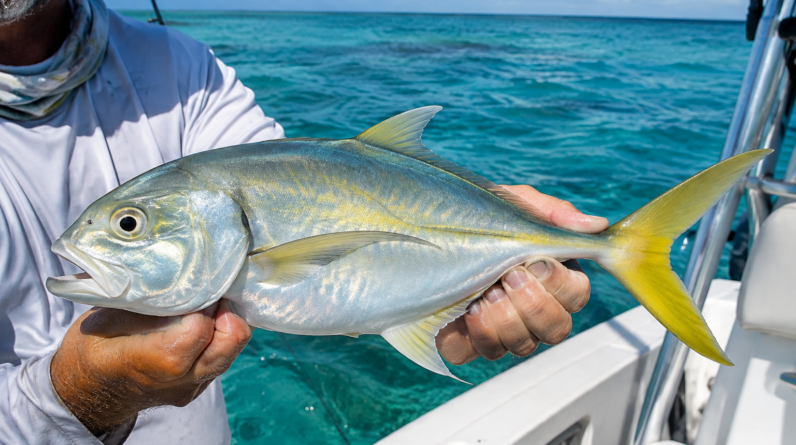
Look for a streamlined silver body, yellowish fins and a distinctly yellow forked tail. Some fish show a faint golden stripe along the side. Don’t confuse yellow jack with jack crevalle, horse-eye jack or permit. Check the identification before keeping your catch.
Where to Find Yellow Jack in the Florida Keys
Start around patch reefs, reef drop-offs, wrecks and deeper channels where baitfish gather. Current breaks and structure that concentrate bait are especially useful.
Watch for nervous bait, birds working the surface or fish marking on your sounder. If nothing happens after several careful presentations, move to another piece of structure rather than spending the whole morning in one spot.
If you’re choosing between shallow and deeper water, read our reef versus offshore fishing guide.
Best Bait and Lures for Yellow Jack
Live bait
Live pilchards, small pinfish and other locally available baitfish are good starting points. Match your hook size to the bait and let it swim naturally near the fish.
Jigs
Small metal jigs and bucktail-style jigs help you cover the water column. Cast past a bait school, let the lure sink, then retrieve with short lifts and pauses. Try a faster retrieve when fish are chasing near the surface.
Soft plastics
A paddle-tail soft plastic on a jig head is a practical option when you don’t have live bait. Adjust jig-head weight for current and depth.
How to Fish a Patch Reef for Yellow Jack
Before you cast, take a few minutes to study the current. A patch reef may look quiet on the surface, but moving water can carry bait across one side of the structure. Look for that edge rather than dropping a bait directly into the coral.
Approach slowly and keep the boat at a safe distance from shallow reef. Never anchor on coral. If you use an anchor, choose a legal sandy bottom and check the local protected-area rules first.
Start with a bait or jig that reaches the depth where you mark fish. When the current is strong, a slightly heavier jig can help you maintain contact. In clear water, make longer casts and give your bait room to swim away from the boat.
Common Yellow Jack Fishing Mistakes
- Fishing too far from the bait: Work the edge of the bait school and nearby current seams.
- Using too much weight: A heavy sinker can make a live bait look unnatural. Use only enough weight to reach the fish.
- Ignoring the current: Fish often position themselves where food passes by. Change your casting angle before changing locations.
- Rushing the fight: Keep the rod loaded and use a steady drag rather than jerking the fish toward the boat.
- Assuming every jack is the same species: Identify your fish before deciding whether to harvest it.
Simple Yellow Jack Tackle Setup
- Medium spinning rod with a smooth drag
- Spinning reel holding approximately 15 to 30-pound braided line
- Fluorocarbon leader selected for water clarity and nearby structure
- Appropriately sized circle hooks for live bait or compact jigs for artificial presentations
- Landing net, dehooking tool and cooler if you plan to keep a legal fish
These are starting points, not strict requirements. Increase tackle strength around heavy structure, and avoid pulling so hard that you straighten a hook.
How to Catch Yellow Jack Step by Step
- Find moving water near reef structure or a bait concentration.
- Keep the boat clear of the fish and make a cast beyond the target.
- Let your bait swim or work your lure through the strike zone.
- Keep steady pressure after the hookup and guide the fish away from sharp structure.
- Land the fish promptly, identify it and release it carefully if you won’t keep it.
When Should You Target Yellow Jack?
Yellow jack can be encountered across different seasons in the Keys. Instead of planning around a guaranteed month, focus on comfortable sea conditions, moving water and active bait. A flexible charter itinerary gives you the chance to switch between yellow jack, snapper and other reef species.
For a wider view of your options, see our Florida Keys fish species guide.
Yellow Jack Fishing Regulations
Florida’s Fish and Wildlife Conservation Commission lists yellow jack as a distinct species and does not list it among its individually regulated recreational saltwater species. The state’s default rules for unregulated species may therefore apply. Under the current FWC guidance, the default recreational bag limit for an unregulated species is two fish or 100 pounds per person per day, whichever is more. This is not permission to ignore protected-area restrictions.
Rules can differ by location. Biscayne National Park, for example, includes yellow jack in its separate 10-fish aggregate limit for certain species. Always confirm your exact fishing location, license requirements and current rules before harvesting.
Check the official FWC unregulated species rules, Florida recreational saltwater regulations and Biscayne National Park fishing rules.
Planning a Yellow Jack Fishing Trip
Tell your captain you want to target yellow jack but are happy to fish for other species if conditions change. Ask whether the trip will focus on patch reefs, wrecks or channels, and whether live bait is included.
If you haven’t booked a boat, use our guide to choosing a Florida Keys fishing charter. Bring sun protection, water and a small bag for personal gear.
Yellow jack are worth looking for whenever you see bait gathering near structure. Stay flexible, keep your tackle simple and let the conditions tell you where to fish.