

Table of Contents
Florida Keys Bridge Fishing: What You Need to Know Before You Go
Florida Keys bridge fishing is one of the easiest ways to get a line in the water without booking a charter or owning a boat.
You can pull up, carry a small amount of gear, fish for an hour or two, and leave whenever you are ready.
That sounds simple.
Sometimes it is.
But bridge fishing in the Florida Keys has its own challenges.
Current can rip through some areas.
Fish can cut you off around pilings.
Parking and access vary.
And if you are targeting sharks or certain regulated species, extra rules can apply.
Here is what to know before you start fishing from a Florida Keys bridge.
Why Florida Keys Bridge Fishing Is So Popular
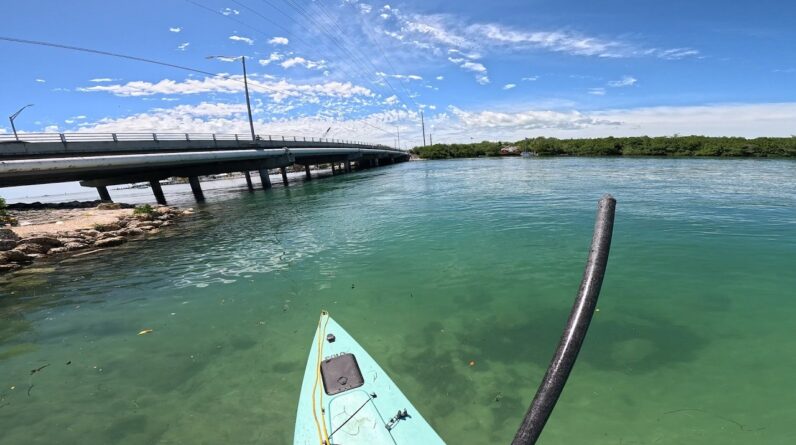
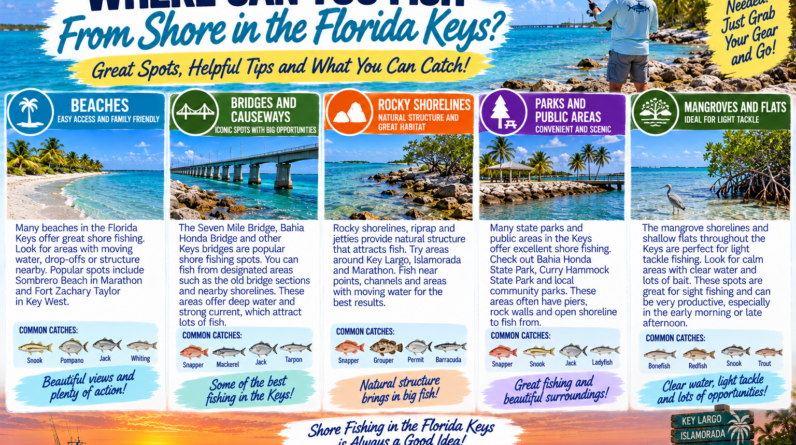
Bridge fishing gives you access to water that may be deeper and faster moving than you can reach from shore.
Bridges also create structure.
Pilings, shadows, current breaks, channels, and bait movement can attract fish.
That combination is why bridges can hold such a wide variety of species.
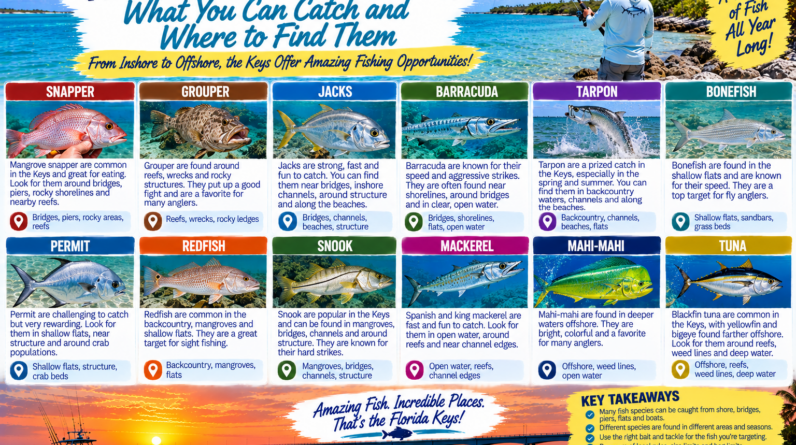
Depending on the location and time of year, you may encounter:
- Mangrove snapper
- Yellowtail snapper
- Grunts
- Jacks
- Barracuda
- Tarpon
- Sharks
- Mackerel
- Pinfish
- Other inshore and reef species
You never really know what may swim through.
That unpredictability is part of the fun.
Is Florida Keys Bridge Fishing Good for Beginners?
Yes, but keep your first trip simple.
You do not need a boat.
You do not need to commit to a full day.
And you do not need expensive equipment just to see if you enjoy it.
The harder part is dealing with the bridge itself.
You may have:
- Strong current
- Deep water
- Snags
- Bridge pilings
- Other anglers nearby
- Passing boats
- Limited room for casting
- A long distance between you and the water
A beginner can absolutely fish a bridge.
Just do not expect it to feel like casting from the edge of a quiet pond.
Do You Need a Fishing License for Florida Keys Bridge Fishing?
Usually, yes.
If you are a non-resident age 16 or older, you generally need a Florida recreational saltwater fishing license to fish from a bridge unless another exemption applies. Florida residents who only fish saltwater from shore or structures attached to shore can qualify for the state’s no-cost shoreline license. (MyFWC)
For non-residents, FWC currently lists:
- 3-day saltwater license: $17
- 7-day saltwater license: $30
- Annual saltwater license: $47
License fees can change, so check the current FWC information before your trip. (MyFWC)
Check Florida saltwater fishing licenses
Which Florida Keys Bridges Can You Fish From?
Do not assume every bridge is open to anglers.
Some old highway and railroad bridge sections have historically been retained for pedestrian access and fishing, while other bridges may have restrictions, construction, closures, or limited parking. Monroe County planning documents identify several old bridge and catwalk areas used for fishing access. (Monroe County Government)
Conditions and access can change.
Look for:
- Posted fishing signs
- Designated parking
- Pedestrian areas
- Railings
- No-fishing signs
- Temporary closures
If you are unsure, check the location before making a special trip.
Do not set up on an active traffic bridge just because you see water underneath it.
What Is the Best Time for Florida Keys Bridge Fishing?
There is no one perfect time.
But tide and light can make a big difference.
Many bridge anglers pay close attention to moving water.
Current carries bait through channels and around pilings.
Fish often use those areas to feed.
Early morning and evening can also be comfortable times to fish because the sun is less intense.
Night fishing can be productive at some locations, but make sure the area is legally open and safe after dark.
If you are unfamiliar with the bridge, your first visit is usually easier during daylight.
Moving Water Matters
This is one of the first things you will notice.
A bridge can look calm from the road.
Then you drop a bait into the water and watch it shoot sideways.
Tidal current can be strong.
That affects almost everything:
- Sinkers
- Line angle
- Bait presentation
- Where you cast
- Where fish hold
- How quickly you snag
You may need more weight when the current picks up.
Then you may need much less as the tide slows.
Do not assume one sinker size will work all day.
Fish the Current Breaks
You do not always need to cast as far as possible.
Bridge pilings interrupt the current.
That creates areas where fish can sit without fighting the full force of the water.
Look for:
- Current seams
- Eddies
- Shadow lines
- Areas behind pilings
- Bait schools
- Birds working nearby
Fish often position themselves where food comes to them.
A well-placed bait close to structure may outperform a huge cast into open water.
What Bait Works for Florida Keys Bridge Fishing?
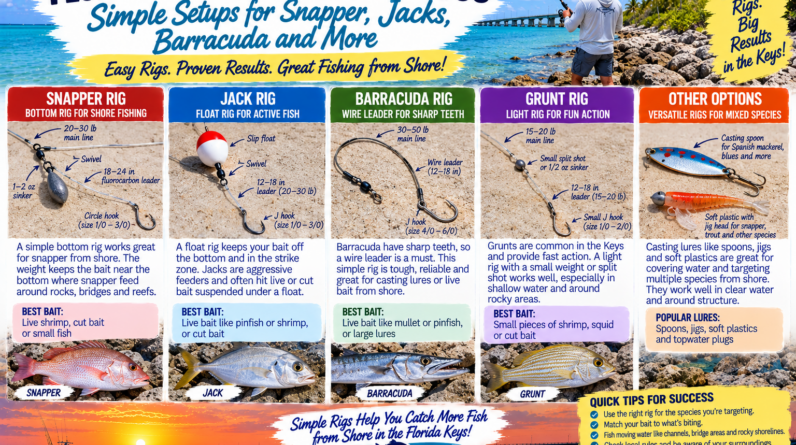
There is no single best bait.
Common choices can include:
- Live shrimp
- Pilchards
- Pinfish
- Cut bait
- Squid
- Small live baitfish
Live shrimp is a simple starting point for many visitors.
It can attract a variety of species and is easy to find at many bait shops.
If you are targeting larger fish, your bait and tackle may need to change considerably.
Before buying anything, stop at a nearby bait shop and ask what anglers have been catching from the bridges.
Our Florida Keys Bait Shops guide can help you find a place to start.
What Rod Is Best for Florida Keys Bridge Fishing?
For general bridge fishing, a medium or medium-heavy spinning setup can handle a wide range of situations.
But there is a huge difference between fishing for snapper and targeting tarpon or sharks.
A basic setup might include:
- 7- to 8-foot spinning rod
- Saltwater spinning reel
- Braided main line
- Fluorocarbon or monofilament leader
- Circle hooks or J-hooks as appropriate
- Assortment of sinkers
Do not get too caught up in exact numbers before you know what you are targeting.
Talk to a local tackle shop.
Tell them:
- Which bridge you plan to fish
- What you hope to catch
- Whether you are using bait or lures
- What gear you already have
That will get you much better advice than buying equipment blindly.
Use Enough Tackle for the Structure
Bridge fish have an advantage.
They know exactly where the pilings are.
You do not.
A good fish may immediately head for:
- Concrete
- Rock
- Pilings
- Debris
- The underside of the bridge
If your tackle is too light, the fight may last about five seconds.
That does not mean you need giant equipment for every fish.
It means your tackle should match both the fish and the structure.
Landing Fish From a Bridge Can Be the Hard Part
Hooking the fish may be easier than getting it up.
Some bridges sit well above the water.
Trying to lift a decent fish by the fishing line can break the line, damage the fish, or cause you to lose it.
A bridge net or drop net can help where their use is appropriate.
If you plan to keep legal fish, think about how you will land them before you hook one.
Do not wait until a nice snapper is hanging ten feet below you to figure out the plan.
Florida Keys Bridge Fishing for Snapper
Snapper are one of the species many visiting bridge anglers hope to catch.
Mangrove snapper in particular can be found around structure.
They can also be very good at getting back into that structure.
Use tackle strong enough to turn the fish away from pilings.
Baits may include shrimp, small baitfish, or cut bait.
Always check current size and bag limits before keeping fish.
Check current Florida saltwater fishing regulations
Can You Catch Tarpon From Florida Keys Bridges?
Yes.
Tarpon move through channels and around bridges, particularly during certain periods of the year.
Seeing them does not mean catching one will be easy.
Tarpon are powerful.
They jump.
They make long runs.
And bridge structure gives them plenty of opportunities to break your line.
If you specifically want to target tarpon from a bridge, use equipment suited for the job and learn the current tarpon handling rules before fishing.
A small snapper setup is not a tarpon setup.
Barracuda Around Florida Keys Bridges
Barracuda are common around many Florida Keys structures.
They may sit near pilings or patrol areas where baitfish gather.
They can also appear suddenly when you hook a smaller fish.
Barracuda have sharp teeth.
Do not put your hands near the mouth.
Use appropriate tools and leader material if you are intentionally targeting them.
Shark Fishing From Florida Keys Bridges Has Extra Rules
If you plan to target sharks from a Florida Keys bridge, pay close attention to the regulations.
Florida requires shore-based shark anglers age 16 and older to complete an educational course and obtain a free shore-based shark fishing permit. Bridges and piers count as shore-based fishing locations for this rule. (MyFWC)
Specific tackle requirements can also apply when targeting sharks.
FWC currently requires non-offset, non-stainless-steel circle hooks when targeting sharks with live or dead natural bait, along with a device capable of quickly cutting the leader or hook. (MyFWC)
Many shark species are prohibited from harvest.
FWC also notes that catch-and-release shark fishing from high piers and bridges is not recommended because safely handling and releasing the shark can be difficult. (MyFWC)
If sharks are your goal, read the current FWC rules before going.
See Florida’s shore-based shark fishing rules
Do Not Assume Every Shark Is Legal to Keep
Florida protects many shark species.
Some prohibited species must remain in the water during the release process.
That makes fish identification especially important.
If you cannot confidently identify the shark, do not assume it is legal to keep.
Release it safely.
Can You Use Artificial Lures From the Bridges?
Absolutely.
Depending on the conditions and species, you might try:
- Jigs
- Soft plastics
- Spoons
- Swimming plugs
- Topwater plugs
- Small baitfish imitations
Lures can be convenient because you do not have to keep bait alive.
They can also cover more water.
If you see jacks, mackerel, barracuda, or other active fish chasing bait, casting an artificial lure can be a lot of fun.
Do You Need a Heavy Sinker?
Maybe.
This depends almost entirely on the current.
During stronger tidal flow, a lightweight sinker may never reach the area you are trying to fish.
During slower water, too much weight may make your presentation less natural.
Carry several sinker sizes.
Adjust as the water changes.
Bridge fishing becomes much easier when you stop fighting the current and start adjusting to it.
Watch Other Anglers Before You Start
This is one of the easiest ways to learn a new bridge.
Do not immediately unload everything and start casting.
Spend five or ten minutes watching.
Look at:
- Where people cast
- How much weight they use
- Whether they are catching anything
- Which direction the current is flowing
- Where lines are drifting
- Where people are landing fish
- How crowded the bridge is
You can learn a surprising amount without bothering anyone.
Give Other Anglers Space
Bridge fishing can get crowded.
Your line may drift a long way in strong current.
That means a cast that looks harmless can cross three other lines a minute later.
Pay attention.
If everyone is casting in the same general direction, there is probably a reason.
Do not drop a bait directly across somebody else’s drift.
A little awareness makes bridge fishing much more enjoyable for everyone.
What Should You Bring Bridge Fishing?
You do not need much.
A basic bridge fishing kit might include:
- Rod and reel
- Small tackle bag
- Extra hooks
- Leader material
- Sinkers
- Pliers
- Line cutter
- Bait
- Bucket
- Cooler with ice if keeping legal fish
- Water
- Sunscreen
- Hat
- Polarized sunglasses
- Rag or towel
A bridge net can also be useful depending on the location and the fish you are targeting.
Keep your setup portable.
The farther you have to walk from the car, the more you will appreciate bringing less stuff.
Bring More Water Than You Think You Need
Florida heat can make a couple of hours on a bridge feel much longer.
There may be very little shade.
Wind can make you feel cooler while you are still losing water.
Bring enough to drink.
This matters even more if you are fishing with children.
Keep an Eye on the Weather
Bridges are exposed.
Wind, rain, lightning, and heat can all become problems.
Lightning is especially serious.
Do not stand on an exposed bridge holding a fishing rod during a thunderstorm.
If storms are developing, pack up.
There will always be another fishing day.
Can You Fish Florida Keys Bridges at Night?
Some locations may allow it.
Night fishing can be productive, particularly around lighted areas where bait gathers.
But access rules vary.
Check:
- Hours
- Parking rules
- Lighting
- Pedestrian access
- Posted restrictions
Bring a headlamp.
Also bring a backup light.
Dropping your only flashlight into the water at midnight is a very efficient way to end the trip.
Be Careful With Fish Around the Rail
Do not leave fish flopping on hot concrete.
If you are releasing something, handle it quickly.
If you plan to keep a legal fish, put it on ice.
If you do not know what you caught, identify it before keeping it.
That is especially important in the Florida Keys, where you may catch species you have never seen before.
Florida Keys Bridge Fishing Can Be Cheap
That is a major part of the appeal.
Once you have basic gear, a bridge trip may only require:
- License
- Bait
- Ice
- Fuel
- A little tackle
Compare that with the cost of a private fishing charter.
You do not get the boat, captain, equipment, or access to distant fishing grounds.
But you can fish for several hours without spending much money.
That makes bridge fishing especially useful if you already have one charter booked and want more fishing during the rest of your vacation.
Combine Bridge Fishing With a Charter
You do not have to choose one or the other.
A great Florida Keys fishing vacation might include both.
Book a charter for the experience you cannot easily create yourself.
Then spend another morning or evening fishing a bridge.
The charter may even teach you a few things that help when you fish on your own later in the trip.
If you are still deciding whether a private boat fits your budget, read our Florida Keys Fishing Charter Cost guide.
Ask a Bait Shop Before Picking a Bridge
This may be the best shortcut.
Walk into a local bait shop and say:
“We are visiting and want to fish from a bridge for a few hours. Where would you suggest, and what should we use?”
Then listen.
Conditions change.
A bridge that was good last month may be slow this week.
A local shop may know:
- Where fish have been biting
- Which bridges are accessible
- What bait is working
- Which tide has been better
- What tackle you need
Buy some bait or tackle while you are there.
Local information is worth supporting.
Your First Florida Keys Bridge Fishing Trip
Do not make the first trip complicated.
Find a legal bridge fishing area.
Get the correct license.
Stop at a bait shop.
Buy some shrimp or another recommended bait.
Bring a simple spinning setup.
Fish moving water around structure.
And pay attention to what the people around you are doing.
You may catch snapper.
You may hook something much larger than expected.
You may spend two hours feeding bait to fish you never see.
That is all part of it.
The nice thing about bridge fishing is that you can come back tomorrow and try again.
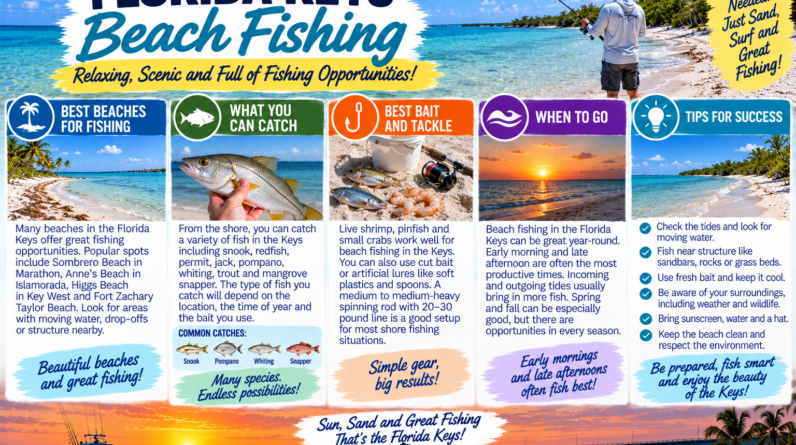
More Ways to Fish the Florida Keys Without a Boat
Bridge fishing is only one option.
Our Florida Keys Fishing Without a Boat guide covers shore fishing, piers, party boats, kayaks, and other ways to get on the water without hiring a private charter.
You can also use the Florida Keys Fishing Calendar to see what species may be around during your vacation.
And before buying bait or tackle, check our Florida Keys Bait Shops guide.