

Table of Contents
Florida Keys Permit Fishing: Best Time, Where to Go and How to Catch Them
Florida Keys permit fishing is one of the hardest kinds of inshore fishing you can choose.
That is also the appeal.
Permit are strong.
They are cautious.
They have excellent eyesight.
And they have a reputation for ignoring perfectly good baits for reasons known only to the fish.
You may spend hours looking for one.
Then get a single good shot.
If the fish eats, everything changes fast.
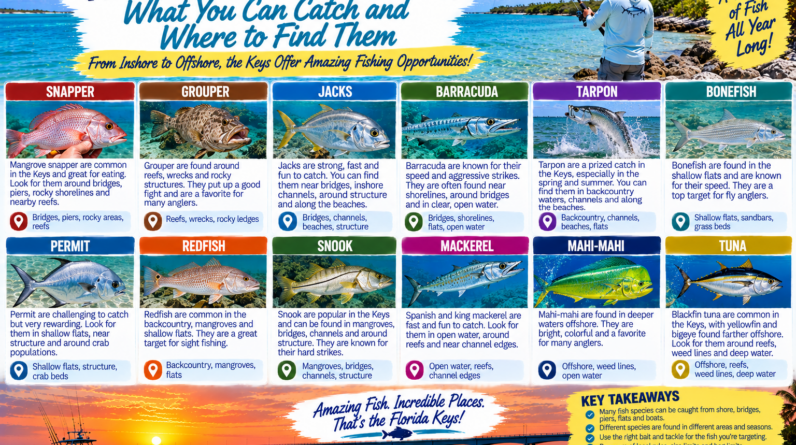
Permit can be found on shallow flats, around channels, near wrecks, and around deeper structure throughout the Florida Keys.
They can be caught on conventional tackle or fly gear.
But nobody should expect easy fishing.
What Is a Permit?
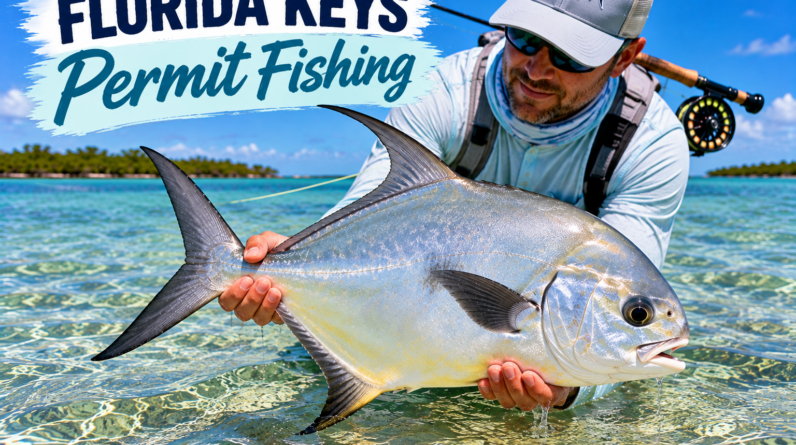
Permit are deep-bodied saltwater fish with:
- Silver sides
- Dark fins
- A forked tail
- A rounded, powerful body
- A distinctive high dorsal profile
They are built differently from bonefish.
Bonefish are long and streamlined.
Permit are deeper-bodied and can grow substantially larger.
Both are prized flats fish.
Both can be difficult to fool.
Permit may be even less forgiving.
What Is the Best Time for Florida Keys Permit Fishing?
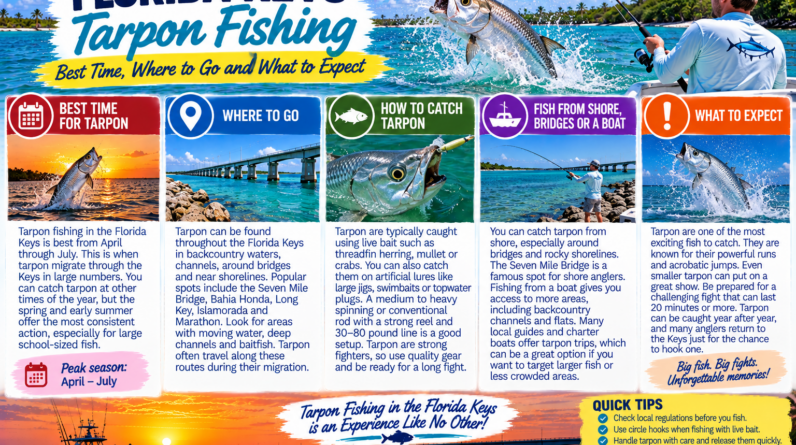
The official Florida Keys sport-fishing calendar lists permit from March through November. Florida Keys & Key West
That gives you a long window.
But the best time depends on what kind of permit fishing you want.
Shallow-water flats fishing may be affected by:
- Water temperature
- Tide
- Wind
- Sun
- Seasonal movement
Permit can also move around deeper structure and wrecks.
If catching one is a major goal, ask a guide what type of permit fishing is best during your travel dates.
Can You Catch Permit Year-Round?
It is possible.
The March through November period is the main season shown on the Florida Keys fishing calendar, but fish do not necessarily disappear outside that range. Florida Keys & Key West
Winter conditions can change shallow-water fishing.
Cold fronts may affect water temperature and fish behavior.
A warm afternoon may produce very different conditions from a cold morning after a front.
Local guides pay close attention to these changes.
Where Do Permit Live in the Florida Keys?
Permit can be found in very different environments.
Possible areas include:
- Shallow flats
- Sand flats
- Grass flats
- Channels
- Wrecks
- Reefs
- Deeper structure
That means “permit fishing” can describe two very different trips.
One trip might involve standing on the bow of a skiff searching for a single fish in two feet of water.
Another might involve dropping or presenting bait around offshore structure.
Flats Fishing for Permit
This is the version many anglers dream about.
The guide poles a shallow skiff across clear water.
Everyone watches.
Eventually someone sees a dark shape or tail.
The fish moves slowly across the flat.
Then you need to make a good cast without spooking it.
That sounds straightforward until you try it.
Why Are Permit So Difficult?
Permit are wary.
They can react to:
- Boat noise
- Poor casting
- Heavy splash
- Shadows
- Bad presentation
- Excessive movement
- Leader
- Pressure from other boats
Sometimes everything looks perfect and the fish simply swims away.
That is part of permit fishing.
Islamorada Permit Fishing
Islamorada is one of the best-known permit destinations in the Keys.
The area’s backcountry and flats give anglers opportunities for permit, bonefish, tarpon, and other shallow-water species.
The official Florida Keys tourism site specifically highlights permit fishing in Islamorada’s backcountry. Florida Keys & Key West
That makes Islamorada a strong choice if you want to build a trip around flats fishing.
Use our Islamorada Fishing Guide for broader planning.
Lower Keys Permit Fishing
The Lower Keys contain large areas of shallow flats and backcountry water.
That makes them especially attractive to anglers interested in:
- Permit
- Bonefish
- Tarpon
- Fly fishing
- Light-tackle sight fishing
If fishing is the main purpose of your trip, staying somewhere in the Lower Keys rather than downtown Key West may put you closer to the style of water you want.
Key West Permit Fishing
Key West gives you access to flats and backcountry water while also giving the rest of your group plenty to do off the boat.
That can work well if:
- You want serious fishing
- Your family wants sightseeing
- You want restaurants and nightlife
- Fishing is only part of the vacation
Read our Key West Fishing Guide before choosing a base.
What Bait Is Best for Permit?
Crabs are one of the classic permit baits.
Shrimp can also work.
Permit commonly feed on crustaceans and other bottom-dwelling prey.
Possible natural baits include:
- Small crabs
- Shrimp
- Other natural prey appropriate to the situation
The exact bait can depend on whether you are fishing:
- Flats
- Wrecks
- Reefs
- Deeper structure
Ask the guide what fish have been eating recently.
Why Are Crabs So Popular for Permit?
They are natural permit food.
A small live crab presented correctly can be difficult for a feeding permit to ignore.
The hard part is not owning a crab.
The hard part is:
- Finding the fish
- Making the cast
- Putting the bait in the right place
- Avoiding a bad splash
- Letting the fish find it naturally
Presentation matters.
Can You Catch Permit on Artificial Lures?
Yes.
Permit can be caught on artificial presentations.
Possible choices include:
- Crab imitations
- Shrimp imitations
- Small jigs
- Flies
Artificial permit fishing is generally not the easiest route for a beginner.
But that challenge is exactly why fly anglers value permit so highly.
Fly Fishing for Permit
Permit are among the most respected saltwater fly-fishing targets.
A successful permit shot may require:
- Fast casting
- Good accuracy
- Correct distance
- Proper lead
- Good presentation
- Controlled stripping
- Patience
You may not get many opportunities in one day.
That makes practice before the trip extremely valuable.
Practice Casting Before Your Permit Trip
This is not the fishing trip where you want to learn to cast on the boat.
Practice at home.
Put targets at:
- 30 feet
- 40 feet
- 50 feet
- Different angles
Practice making the cast quickly.
Fish do not wait while you strip another 20 feet of line off the reel.
Polarized Sunglasses Matter
Permit fishing is often visual.
Good polarized glasses help you see:
- Fish
- Rays
- Grass
- Sand
- Channels
- Bottom changes
Sometimes the guide sees the permit long before you do.
Being able to find the fish quickly after the guide points it out can make the difference between getting a cast and watching it disappear.
Learn the Clock System
Guides often describe fish direction like a clock.
Straight ahead is 12 o’clock.
Slightly right might be 1 o’clock.
Farther right might be 2 or 3.
If the guide says:
“Permit at 1 o’clock, 45 feet.”
you need to understand that immediately.
You do not want to spend the next 15 seconds asking where.
Tide Matters for Permit
Tide controls access to shallow flats.
It also affects how fish move.
An incoming tide can allow permit to move into areas that were too shallow before.
An outgoing tide may push them toward:
- Channels
- Edges
- Deeper flats
- Drop-offs
A good permit guide plans around these movements rather than simply choosing a random fishing time.
Is Incoming or Outgoing Tide Better?
Neither is automatically better.
They create different situations.
Incoming tide can bring fish onto newly flooded flats.
Outgoing tide can concentrate fish along edges and deeper routes.
What matters most is understanding where fish are likely to move during that stage of tide.
That is one of the biggest advantages of hiring a guide.
Sun Helps With Sight Fishing
Bright sun can make permit easier to see.
That means the traditional idea that sunrise is always the best fishing time does not necessarily apply.
Midday light can be useful because it penetrates the water better.
Clouds make things harder.
A permit may still be right there.
You simply cannot see it.
Wind Can Make Permit Fishing Difficult
Wind affects:
- Casting
- Boat positioning
- Water visibility
- Surface chop
- Presentation
A little wind may help hide the boat.
Too much can make accurate casting difficult.
A guide may choose different flats based on wind direction.
What Tackle Do You Need for Permit?
Tackle depends on fish size and fishing style.
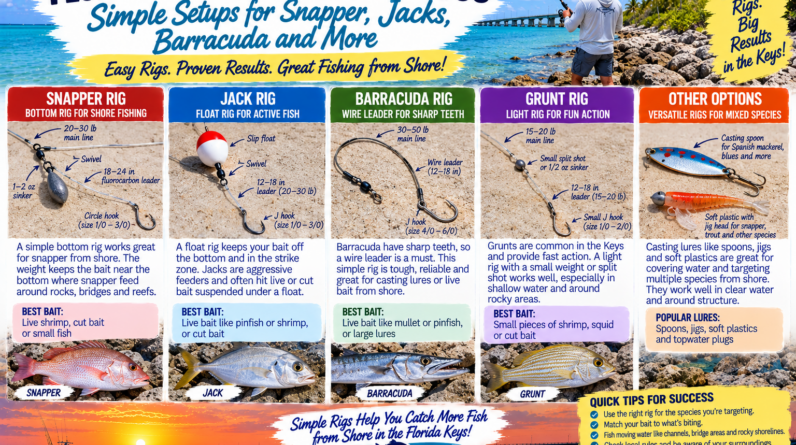
Conventional setups may use:
- Medium spinning rods
- Quality spinning reels
- Strong main line
- Fluorocarbon leader
- Small hooks appropriate for crab or shrimp
The reel needs a smooth drag.
Permit are powerful.
Once hooked, they can make long runs.
Do Permit Fight Hard?
Very.
They combine:
- Power
- Speed
- Endurance
A large permit on light tackle can take a while to land.
Do not assume you have the fish because it is halfway to the boat.
It may have another long run left.
Permit vs. Bonefish
Bonefish are generally faster.
Permit are heavier and more powerful.
Bonefish can be extremely difficult to approach.
Permit can be even more suspicious.
Both require:
- Stealth
- Accurate casting
- Good eyesight
- Tide knowledge
If you want to compare them directly, read our Florida Keys Bonefish Fishing guide.
Permit vs. Tarpon
Tarpon fishing is much more dramatic.
Tarpon jump.
Permit generally do not put on the same aerial show.
But fooling a permit can be more difficult.
Tarpon may involve:
- Bridges
- Channels
- Larger live baits
- Heavier tackle
Permit often involve:
- Flats
- Crabs
- Sight fishing
- Accurate casting
- Light tackle
Read our Florida Keys Tarpon Fishing guide if you are choosing between species.
What Is a Florida Keys Grand Slam?
A traditional flats grand slam means catching:
- Bonefish
- Permit
- Tarpon
in the same day.
That is a major achievement.
It should not be treated as a normal expectation.
You can fish all day and fail to land one permit.
That does not mean the trip was bad.
It means permit fishing is permit fishing.
Is Permit Fishing Good for Beginners?
It can be.
But expectations matter.
If your definition of a fun fishing trip is constant action, permit would not be my first choice.
If you are willing to:
- Watch
- Wait
- Listen
- Make a few important casts
then you may love it.
A beginner with a good guide can absolutely catch a permit.
You do not need decades of fishing experience.
Can Kids Catch Permit?
Yes.
But this depends heavily on the child.
Permit fishing requires patience.
A younger child may enjoy snapper fishing much more.
An older child who likes hunting, sight fishing, and learning may enjoy the challenge.
Be realistic about attention span before booking a full day.
Can You Catch Permit From Shore?
It is possible, but much less straightforward than fishing for snapper or jacks.
Permit can move over accessible shallow flats.
The main problems are:
- Legal access
- Distance
- Fish location
- Water depth
- Limited mobility
A skiff gives you access to far more water.
Wading can work where legal access reaches productive flats.
Can You Wade for Permit?
Yes.
Permit can be targeted while wading shallow flats.
This can be a very stealthy way to fish.
But you also need to consider:
- Stingrays
- Soft bottom
- Deep holes
- Current
- Tide
- Heat
- Distance from shore
Use our Florida Keys Wading Fishing guide before fishing unfamiliar flats.
Can You Keep Permit in the Florida Keys?
Sometimes.
This is where the regulations become especially important.
The entire Florida Keys falls inside Florida’s Special Permit Zone. FWC
Current FWC rules for permit in the Special Permit Zone include:
- 22-inch minimum fork length
- 1 fish per harvester
- Maximum of 2 permit per vessel
- Harvest closed April 1 through July 31 FWC
That closed period protects permit during spawning season.
When Does Florida Keys Permit Harvest Reopen?
Under current rules, harvest in the Special Permit Zone reopens August 1. FWC
The closure runs:
April 1 through July 31.
You can still catch and release permit during the closure.
You just cannot legally harvest them.
Why Is Permit Harvest Closed in Spring and Summer?
FWC closes permit harvest in the Special Permit Zone during the spawning period.
The 2026 closure applied to all Florida Keys state and federal waters from April 1 through July 31. FWC
That means some of the best fishing months may also require complete catch and release.
Check the current rules before every trip.
What Is Fork Length?
Permit regulations use fork length.
That measurement runs from the tip of the nose to the fork in the tail.
Do not substitute total length.
If you intend to keep a legal permit, make sure you know the correct measurement method before fishing.
Do You Have to Keep Legal Permit?
No.
A legal fish can still be released.
Many anglers treat permit primarily as a sport fish.
If catching one on a flat is the reason for your trip, getting a good photo and letting it swim away may be all you want.
How Should You Handle Permit?
Handle the fish carefully.
Keep the process quick.
Good practices include:
- Wet your hands
- Support the fish horizontally
- Keep fingers away from the gills
- Minimize air exposure
- Remove the hook quickly
- Revive the fish if necessary
Have the camera ready before lifting the fish.
Sharks Can Be a Problem
Permit can become vulnerable after a hard fight.
If sharks are actively following hooked fish, moving may be the better choice.
There is no point repeatedly releasing exhausted fish into an obvious predator situation.
The fish matters more than another photo.
Do You Need a Fishing License?
If you are fishing aboard a properly licensed charter, customers are generally covered under the charter’s license.
If fishing independently from:
- Shore
- Kayak
- Your own boat
- Rental boat
you may need your own Florida recreational saltwater fishing license.
Always confirm current licensing rules before fishing.
Should You Hire a Permit Guide?
If permit are your main target, yes.
Permit fishing rewards local knowledge.
A guide knows:
- Which flats have been holding fish
- Which tide to fish
- Where the water will be clear
- How wind will affect the flat
- What bait fish have been eating
- How to position the boat
A guide cannot make the fish eat.
But the guide can put you in position to have a chance.
What Kind of Boat Is Used?
Shallow-water permit guides often fish from flats skiffs.
These boats are built to float in very little water.
The guide may use a push pole rather than an engine while approaching fish.
That reduces:
- Noise
- Prop disturbance
- Sudden movement
Stealth is everything.
Half-Day or Full-Day Permit Charter?
If permit are a bucket-list fish, I would lean toward more time.
A full day gives you:
- More tide stages
- More flats
- More chances
- More time to recover from poor weather or missed casts
A half-day can still work if conditions and tide line up well.
Ask the guide what they recommend.
How Much Does a Permit Charter Cost?
Permit fishing usually falls into the flats or backcountry charter category.
Pricing depends on:
- Location
- Captain
- Boat
- Trip length
- Season
Use our Florida Keys Fishing Charter Cost guide to get a broader idea of charter pricing.
What Should You Bring?
A flats charter does not require mountains of gear.
Bring:
- Polarized sunglasses
- Hat
- Sunscreen
- Lightweight sun-protective clothing
- Water
- Phone or camera
- Footwear recommended by the captain
The captain generally provides rods, reels, bait, and tackle.
Confirm before the trip.
Permit Fishing Rewards Patience
This is not a numbers game.
You might see fish and never get a cast.
You might get five casts and miss every one.
You might make one perfect presentation and watch the permit refuse it.
Then you might get one more chance.
The fish eats.
The reel starts screaming.
And the entire day suddenly feels worth it.
That is why anglers become obsessed with permit.
Plan Your Florida Keys Permit Fishing Trip
Start with the Florida Keys Fishing Calendar if you can choose your travel dates.
Use our Florida Keys Fish Species guide to compare permit with other targets.
For other flats species, read:
If you want to fish shallow flats without a boat, see our Florida Keys Wading Fishing guide.
For current harvest rules, check the FWC permit regulations.