

Table of Contents
Florida Keys Sailfish Fishing: Best Time, Where to Go and What to Expect
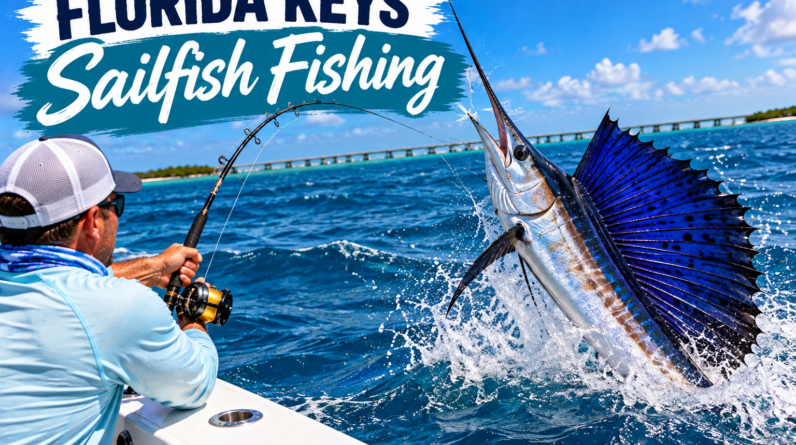
Florida Keys sailfish fishing is one of the biggest reasons anglers head south during the cooler months.
Sailfish are fast.
They jump.
They make long runs.
And that enormous dorsal sail makes them one of the easiest offshore game fish to recognize.
The Florida Keys are particularly well known for winter sailfishing, with boats targeting them from Key Largo through Islamorada, Marathon, and Key West.
If catching a sailfish is high on your fishing list, choosing the right time of year and booking a captain who regularly targets them can improve your chances considerably.
What Is the Best Time for Florida Keys Sailfish Fishing?
The official Florida Keys fishing calendar lists sailfish season from November through May. Winter, especially December through February, is promoted as prime sailfish time in the Keys.
That does not mean you cannot catch a sailfish outside those months.
It means your odds of finding the cooler-season conditions associated with strong sailfish fishing are generally better during that period.
If your whole vacation is being planned around catching one, I would look hardest at:
- November
- December
- January
- February
- March
January and February deserve especially strong consideration.
Why Is Winter Good for Sailfish?
Cooler weather changes offshore conditions.
Cold fronts can move through South Florida and affect:
- Wind direction
- Bait movement
- Current
- Water temperature
- Surface conditions
Sailfish follow bait.
When bait becomes concentrated along reef edges or current lines, sailfish may follow.
A cold front that makes tourists reach for sweatshirts can make offshore anglers much more interested.
Can You Catch Sailfish Year-Round?
Yes.
Sailfish can be encountered outside the traditional peak season.
But if sailfish are your main target, there is little reason to ignore the seasonal advantage.
The Keys give you plenty of other offshore opportunities during warmer months.
Summer is better known for fish such as:
- Mahi-mahi
- Blackfin tuna
- Blue marlin
- Other warm-season offshore targets
If you want sailfish specifically, cooler months make more sense.
Where Is the Best Sailfish Fishing in the Florida Keys?
Sailfish can be caught throughout the Keys.
Major areas include:
- Key Largo
- Islamorada
- Marathon
- Key West
The best location can change with current, bait, wind, and recent fishing activity.
You do not necessarily need to drive to one specific island to catch one.
The bigger decision is choosing an offshore captain who spends a lot of time sailfishing.
Islamorada Sailfish Fishing
Islamorada has a long association with sailfish tournaments and offshore sportfishing.
Its location gives boats relatively quick access to:
- Atlantic reef edges
- Deep water
- Current
- Offshore bait concentrations
That makes Islamorada one of the first places I would consider for a dedicated winter sailfish trip.
Use our Islamorada Fishing Guide if you are deciding where to stay.
Key Largo Sailfish Fishing
Key Largo is another strong option.
It is also convenient for visitors driving from Miami or mainland South Florida.
You can fish the Atlantic side without driving the entire length of the Keys.
That makes Key Largo useful for:
- Weekend trips
- Short fishing vacations
- Travelers combining Miami and the Keys
- Anglers who want offshore fishing without going as far south
Read our Key Largo Fishing Guide for more trip-planning information.
Marathon Sailfish Fishing
Marathon puts you in the Middle Keys.
That gives you access to offshore fishing while also keeping:
- Reefs
- Wrecks
- Bridges
- Florida Bay
- Backcountry fishing
within reach.
That variety can be useful during winter.
If offshore conditions become uncomfortable, you may have other fishing options.
Our Marathon Fishing Guide covers the area.
Key West Sailfish Fishing
Key West also provides offshore sailfish opportunities.
It can be a good choice if fishing is only part of your vacation.
You can combine your fishing trip with:
- Restaurants
- Nightlife
- Sightseeing
- Historic attractions
- Other water activities
Read our Key West Fishing Guide before choosing where to stay.
How Big Are Florida Keys Sailfish?
Atlantic sailfish can reach impressive sizes.
But size is only part of the story.
A sailfish is built for speed.
Its long bill, streamlined body, powerful tail, and enormous dorsal fin make it look completely different from the reef fish most visitors catch.
Once hooked, a sailfish may:
- Run hard
- Change direction quickly
- Jump repeatedly
- Shake its head
- Charge toward the boat
The fight can become chaotic fast.
Why Are Sailfish So Exciting to Catch?
A lot of offshore fish pull hard.
Sailfish put on a show.
You may actually watch the fish:
- Approach a bait
- Raise its sail
- Slash at baitfish
- Strike
- Jump repeatedly after being hooked
That visual part is what separates sailfishing from many other kinds of offshore fishing.
Sometimes you see the fish before the rod ever bends.
How Do You Catch Sailfish in the Florida Keys?
Several methods are commonly used.
They include:
- Live bait fishing
- Kite fishing
- Slow trolling
- Drifting
- Trolling rigged baits
- Trolling artificial lures
The captain chooses the approach based on conditions.
You do not need to know how to do all of these before booking a charter.
That is part of what you are paying the crew to handle.
Live Bait Fishing for Sailfish
Live bait is one of the classic Florida Keys sailfish techniques.
Possible baits include:
- Pilchards
- Ballyhoo
- Goggle-eyes
- Other local baitfish
Baits may be drifted or slowly moved through productive water.
The goal is to present something that looks natural to a hunting sailfish.
Why Live Bait Works So Well
Sailfish are predators.
If schools of bait are moving through an area, sails may follow them.
A live bait:
- Moves naturally
- Creates vibration
- Looks vulnerable
- Can trigger a predatory response
A good crew may spend considerable time before the trip finding or preparing quality bait.
That effort can pay off later.
Kite Fishing for Sailfish
Kite fishing is one of the most interesting ways to target Florida Keys sailfish.
Yes, an actual fishing kite is involved.
The kite allows crews to suspend live baits near the surface while spreading them away from the boat.
The setup helps keep much of the line and terminal tackle out of the water.
The bait stays near the surface.
Then you watch.
Why Kite Fishing Is So Exciting
A strike may happen right on top.
You might see:
- A sail
- A bill
- A dark shape
- A baitfish suddenly panic
- Water explode around the bait
Then the line starts moving.
Watching the bite happen can be just as exciting as fighting the fish.
Do You Have to Know How to Kite Fish?
No.
If you are on a charter, the crew handles the complicated part.
Kite fishing involves:
- Wind
- Kite control
- Multiple lines
- Specialized clips
- Live bait management
- Boat positioning
Your job may simply be to take the rod when the fish is hooked and listen to instructions.
Trolling for Sailfish
Trolling is another option.
Crews may pull:
- Rigged ballyhoo
- Artificial lures
- Teasers
- Combinations of natural and artificial presentations
Trolling allows the boat to cover water.
That can be useful when fish are scattered.
It can also produce other offshore species while you search.
What Else Might You Catch While Sailfishing?
A winter offshore trip can produce more than sailfish.
Possible bonus catches include:
- Blackfin tuna
- King mackerel
- Wahoo
- Mahi-mahi
- Barracuda
- Bonito
- Other pelagic fish
That can help keep the trip interesting even if the sails do not cooperate.
What Happens When a Sailfish Appears?
Things may get loud.
The captain may change boat speed or direction.
The mate may move rods.
Someone may start shouting instructions.
A bait may suddenly skip across the surface.
Then the fish eats.
If this is your first offshore charter, listen carefully.
Do not assume the shouting means something is wrong.
Often it means something finally went very right.
Do You Set the Hook on a Sailfish?
Technique depends on the tackle and method being used.
Do not automatically jerk the rod as hard as possible.
With some sailfish presentations, the fish needs time to take the bait before the line comes tight.
Your captain or mate should tell you exactly what to do.
Follow their instructions rather than something you watched in a random video.
Sailfish Have Bills
That long pointed bill is not decoration.
Sailfish use their bills when feeding.
They may slash at schools of bait before turning back to eat injured fish.
It also means you should be careful around a sailfish beside the boat.
Let the crew handle the fish.
Is Sailfish Fishing Good for Beginners?
Yes.
A beginner can absolutely catch a sailfish.
You do not need to know how to:
- Find bait
- Rig ballyhoo
- Fly a kite
- Choose leader
- Find current edges
- Position the boat
The captain and mate handle those jobs.
You need to listen and fight the fish.
That makes charter fishing one of the easiest ways for a first-time angler to experience serious offshore sportfishing.
Read our Florida Keys Fishing Charters for Beginners if this will be your first trip.
Are Sailfish Easy to Catch?
No.
Do not confuse beginner-friendly with easy.
A good charter can put a beginner in position to catch one.
But the captain cannot force a sailfish to eat.
Some days may produce multiple opportunities.
Other days you may fish for hours without seeing one.
That uncertainty is part of offshore fishing.
Should You Book a Sailfish-Specific Charter?
If sailfish are the main reason for your trip, yes.
Ask the captain directly:
“I specifically want to catch a sailfish. Is that realistic during my dates?”
Then ask:
- Do you regularly target sailfish?
- What months do you prefer?
- Are fish around now?
- Do you live bait, kite fish, or troll?
- Would you recommend a half or full day?
- What other fish might we target if sailfishing is slow?
You will learn a lot from those answers.
General Offshore Charter vs. Sailfish Charter
A general offshore trip may target whatever gives you the best chance of catching fish.
That could include:
- Tuna
- Mahi
- Wahoo
- Kingfish
- Sailfish
A sailfish-focused trip is different.
The captain may spend much more effort finding the right:
- Bait
- Current
- Depth
- Water color
- Wind
- Conditions
If one specific fish matters to you, say so before booking.
Is a Half-Day Enough for Sailfish?
It can be.
The Keys have an advantage because deep Atlantic water can be relatively close compared with some fishing destinations.
That means you may not spend hours simply reaching the fishing grounds.
Still, more time gives you more opportunities.
A half-day may make sense if:
- Your schedule is limited
- You are fishing with children
- Recent sailfishing has been good close to port
- The captain recommends it
When Is a Full-Day Sailfish Charter Better?
A full day gives the crew more flexibility.
That can mean:
- More fishing time
- More distance available
- More bait options
- Ability to wait for changing conditions
- Better ability to switch tactics
If catching a sailfish is a bucket-list goal, I would seriously consider the longer trip.
Compare the options in our Half-Day vs. Full-Day Florida Keys Fishing Charter guide.
Morning or Afternoon for Sailfish?
There is no automatic answer.
Conditions matter more.
A captain may consider:
- Wind
- Tide
- Current
- Bait
- Recent fish activity
- Weather fronts
If the captain tells you the afternoon conditions look better, I would not insist on morning just because someone online said sunrise is always best.
Cold Fronts Can Affect Sailfish Fishing
Winter cold fronts can be uncomfortable for people.
They can also help create interesting fishing conditions.
A front may change:
- Wind direction
- Current
- Bait movement
- Sea conditions
- Water temperature
The exact effect is not always predictable.
That is another reason current local information matters more than a generic seasonal chart.
Can Sailfish Fishing Get Rough?
Yes.
Winter can produce windy conditions.
Atlantic waves can make offshore fishing uncomfortable.
If anyone in your group gets seasick easily, take that seriously.
Talk with the captain before the trip.
Do not hide a history of severe seasickness and hope for the best.
What Boat Is Used for Sailfish Fishing?
Many types of offshore boats can target sailfish.
You may fish from:
- Center consoles
- Sportfishing boats
- Large offshore boats
The ideal boat depends on:
- Captain
- Technique
- Group size
- Weather
- Trip length
A larger boat is not automatically a better sailfish boat.
Experience matters far more.
What Tackle Is Used for Sailfish?
Charter crews usually provide everything.
Sailfish tackle may include:
- Spinning reels
- Conventional reels
- Quality drag systems
- Strong main line
- Leader material
- Circle hooks where required or appropriate
- Specialized kite equipment
You generally do not need to bring your own rod.
If you want to use personal equipment, ask first.
Circle Hooks and Billfish
Federal Atlantic highly migratory species rules include specific gear requirements in certain billfish fishing situations, especially when natural bait is used in tournaments.
Regulations can be technical and may depend on where and how you are fishing.
If you are on a licensed charter, let the captain handle compliance.
If you are targeting billfish independently, check current federal HMS requirements before fishing.
Can You Keep a Sailfish?
Sailfish can legally be retained under specific rules, but catch and release is common.
Florida’s current state-water regulations list a 63-inch minimum lower-jaw fork length for sailfish and a one-billfish-per-person daily limit. Federal waters have their own Highly Migratory Species requirements, including vessel permitting and a 63-inch minimum size for retained sailfish.
If you have no specific reason to retain one, releasing it is the normal choice for many sportfishing crews.
How Is a Sailfish Measured?
Billfish are not measured the same way as many reef fish.
The federal minimum uses lower-jaw fork length.
That means measuring in a straight line from:
- The tip of the lower jaw
- To the fork of the tail
Do not guess at billfish measurements.
If you are on a charter, let the crew handle it.
Do You Need a Federal Permit to Fish for Sailfish?
In federal waters, vessels targeting Atlantic sailfish and other regulated highly migratory species need the appropriate federal HMS permit.
NOAA currently requires a valid HMS Angling or HMS Charterboat/Headboat permit for vessels fishing recreationally for Atlantic billfish. The permit covers the people fishing aboard that vessel.
On a charter, the operator should handle the vessel permitting.
If you are taking your own boat, this is something you need to check before fishing.
Can You Take a Sailfish Out of the Water for a Picture?
This is where release rules matter.
FWC states that sailfish you intend to release may not be removed from the water when fishing in federal waters. The same restriction applies in Florida state waters when fishing under a federal HMS permit.
The safest approach is simple.
If the fish is being released, keep it in the water and get your photos there.
Why Keep Released Sailfish in the Water?
A sailfish has just fought hard.
Removing it for a long photo session adds more stress.
Keeping it in the water makes it easier to:
- Control the fish
- Minimize handling
- Remove or cut the hook
- Revive it
- Release it quickly
Have the camera ready before the fish reaches the boat.
How Should a Sailfish Be Released?
The crew may:
- Keep the fish alongside the boat
- Remove the hook with appropriate tools
- Cut the leader if removing the hook would take too long
- Keep water moving across the gills
- Release the fish when it is ready
Do not hold onto a tired fish simply to get ten more photographs.
Do Sailfish Jump During the Fight?
Often.
That is one of the main reasons people want to catch one.
A hooked sailfish may leap repeatedly.
The jumps can also help the fish throw the hook.
Keep listening to the mate.
The fight can change very quickly.
Sailfish vs. Tarpon
Both are famous for jumping.
But the trips are very different.
Sailfish
Usually associated with:
- Offshore fishing
- Cooler months
- Live bait
- Kite fishing
- Trolling
- Atlantic water
Tarpon
Usually associated with:
- Inshore water
- Bridges
- Channels
- Bays
- Flats
- Spring and summer
If you want to compare them, read our Florida Keys Tarpon Fishing guide.
Sailfish vs. Mahi-Mahi
Mahi are more strongly associated with warmer months.
Sailfish are more strongly associated with winter.
Mahi fishing often involves:
- Weed lines
- Floating debris
- Birds
- Open-water searching
Sailfish fishing often revolves around:
- Reef edges
- Live bait
- Current
- Winter weather patterns
- Kite fishing
Your travel dates may make the decision for you.
Sailfish vs. Wahoo
Both can be excellent cooler-season targets.
Wahoo are incredibly fast and known for blistering runs.
Sailfish add the aerial show.
It is possible to encounter both during the same broader winter offshore season.
Tell your captain whether you care about one species more than the other.
Can Kids Catch Sailfish?
Yes.
Older children in particular may be able to fight one with help.
The bigger question is whether they will enjoy the overall trip.
Offshore sailfishing can involve:
- Waiting
- Rough water
- Wind
- Long periods between bites
A child who loves fishing may have an incredible time.
A young child who needs constant action may prefer reef fishing for snapper.
Read our Florida Keys Fishing Charters With Kids guide before booking.
What Should You Bring on a Winter Sailfish Charter?
Winter in the Keys can still be warm.
It can also be surprisingly cool on a moving boat.
Consider bringing:
- Polarized sunglasses
- Sunscreen
- Hat
- Long-sleeve sun shirt
- Light jacket
- Rain jacket
- Non-slip footwear
- Water
- Snacks if not provided
- Seasickness medication if appropriate
Ask the captain what is already aboard.
Dress in Layers
This matters during winter.
A 65-degree morning may sound warm if you are visiting from somewhere cold.
Add:
- Wind
- Boat speed
- Ocean spray
and it can feel very different.
You can remove a jacket later.
You cannot put on the jacket sitting back at the hotel.
How Much Does a Sailfish Charter Cost?
Price depends on:
- Location
- Boat
- Captain
- Trip length
- Number of anglers
- Season
Dedicated offshore sportfishing can cost more than a short reef trip.
Before setting your budget, read our Florida Keys Fishing Charter Cost guide.
Is Florida Keys Sailfish Fishing Worth It?
If you like offshore sportfishing, absolutely.
A sailfish gives you:
- Speed
- Jumps
- Long runs
- Visual strikes
- A serious fight
- A true Florida Keys game-fishing experience
But go into the trip with realistic expectations.
This is not the same as fishing a reef where you may catch something every few minutes.
You might spend hours looking for one opportunity.
That one opportunity can make the entire day.
How to Plan a Florida Keys Sailfish Trip
If sailfish are your priority, build the trip around the fish rather than simply booking a random Florida Keys vacation and hoping the timing works.
Start with these decisions:
- Travel during the cooler-season window
- Choose Key Largo, Islamorada, Marathon, or Key West
- Find captains who specifically mention sailfishing
- Ask about recent sailfish activity
- Consider a full-day charter
- Stay flexible about departure time
- Watch winter weather
Do that and you have a much stronger plan than simply showing up with a fishing rod.
Florida Keys Sailfish Fishing Is About One Big Opportunity
Some fishing is about numbers.
Sailfishing often is not.
You may catch several.
You may catch one.
You may watch one appear behind a bait and disappear without eating.
But when the line finally comes tight and the fish launches out of the Atlantic, you will understand why anglers spend entire winter vacations chasing them.
Plan Your Florida Keys Sailfish Fishing Trip
Start with the Florida Keys Fishing Calendar to compare sailfish season with other species.
For broader species research, read our Florida Keys Fish Species guide.
Then choose your destination:
For current legal requirements, use the official FWC and NOAA billfish information. FWC Billfish, Tuna and Swordfish Regulations NOAA Atlantic Billfish Requirements