

Table of Contents
What Happens on a Florida Keys Fishing Charter? What to Expect From Start to Finish
You’ve booked a Florida Keys fishing charter.
Now what?
If you’ve never been on a charter before, you might be wondering what actually happens once you show up at the marina.
Do you bring your own rods?
Do you need bait?
Do you need a fishing license?
What happens if you’ve never fished before?
Can you keep what you catch?
And what exactly are you supposed to do when the captain hands you a fishing rod and tells you there’s a fish on the other end?
The good news is that fishing charters are designed to take care of much of this for you.
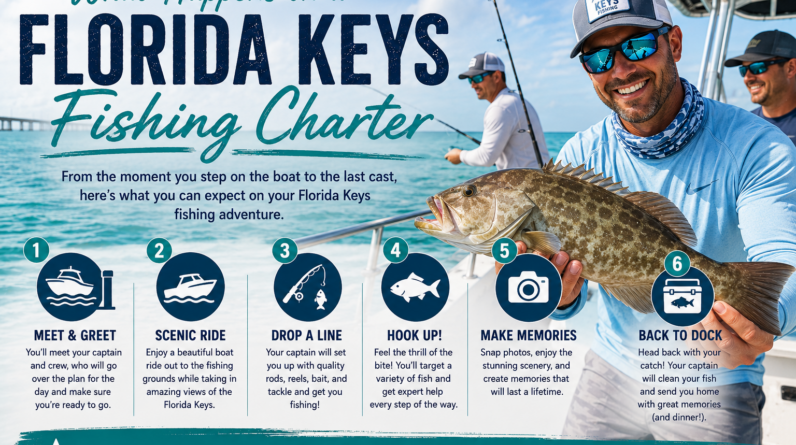
Here’s what you can typically expect from the time you arrive at the dock until you step back onto land.
Before the Fishing Charter
Your charter experience really begins before you arrive.
A good captain will usually give you basic instructions covering things such as:
- Where to meet
- What time to arrive
- What to bring
- What not to bring
- Parking
- Food and drinks
- Weather considerations
- Payment
- Cancellation policies
Read those instructions.
Don’t assume every boat operates the same way.
If you haven’t decided how long you want to fish yet, our guide to half-day vs full-day Florida Keys fishing charters can help you decide whether four, six or eight hours makes the most sense.
What Time Should You Arrive?
Don’t arrive at the marina at the exact minute your charter is supposed to leave.
If your trip starts at 7:00 a.m., the captain may want you there 15 to 30 minutes earlier.
That gives you time to:
- Find parking
- Locate the boat
- Load your belongings
- Meet the crew
- Use the restroom
- Go over the fishing plan
Ask the captain exactly when they want you there.
Showing up late can cut into your fishing time.
Meeting the Captain and Crew
When you reach the boat, you’ll usually meet the captain first.
Larger offshore boats may also have a mate.
Smaller flats and backcountry boats are often operated by the captain alone.
This is a good time to tell them anything they need to know.
For example:
“We’ve never been fishing before.”
“Our son is eight and this is his first fishing trip.”
“I’d really like to catch a sailfish if conditions are right.”
“One of us gets seasick.”
“We’d like to keep some legal fish for dinner.”
Don’t be embarrassed about being inexperienced.
The Florida Keys tourism bureau specifically describes local charter captains as guides and teachers who help visiting anglers learn while they’re on the water. Florida Keys fishing information also notes that charter fleets operate throughout the island chain.
The more the captain knows about your group, the better they can plan the day.
You’ll Usually Discuss the Fishing Plan
Before leaving the dock, the captain may explain what’s been biting recently.
You might have booked the trip hoping for mahi-mahi.
But perhaps mahi have moved far offshore while blackfin tuna or snapper fishing has been excellent.
A good captain may give you choices.
Something like:
“We can spend the day looking for mahi, but they’ve been scattered. The reef bite has been really good if you’d rather have more action.”
Listen carefully.
One of the biggest reasons people hire a charter is local knowledge.
If you’re wondering whether paying for that experience makes sense, see our guide: Is a Florida Keys Fishing Charter Worth It?.
Do You Need to Bring Fishing Rods?
Usually not.
Most established Florida Keys fishing charters provide the fishing gear needed for the trip.
That can include:
- Rods
- Reels
- Line
- Leaders
- Hooks
- Lures
- Terminal tackle
The exact gear depends on what you’re fishing for.
An offshore wahoo setup looks very different from a bonefish rod.
If you have your own equipment and want to bring it, ask first.
Experienced anglers sometimes prefer using their own rods, but the captain may already have equipment better suited to local conditions.
Is Bait Included?
Often, yes.
Many charters supply bait as part of the trip.
Depending on what you’re targeting, that could include:
- Ballyhoo
- Pilchards
- Goggle-eyes
- Shrimp
- Crabs
- Squid
- Cut bait
- Other live baitfish
Some captains catch live bait before customers arrive.
Others may catch bait with you after leaving the marina.
And some buy bait.
Ask what’s included when you book.
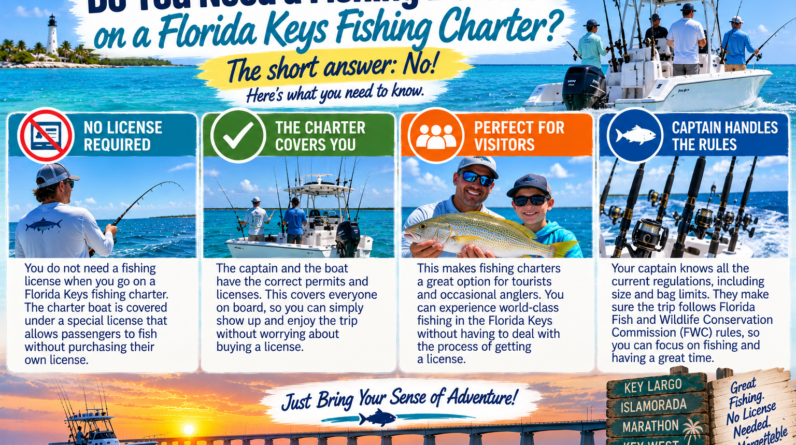
Do You Need a Florida Fishing License?
If you’re fishing aboard a properly licensed Florida saltwater charter vessel, passengers generally do not need to purchase their own recreational saltwater fishing license for that trip.
The vessel’s charter license covers the paying fishing passengers.
You can confirm the current rules directly with the Florida Fish and Wildlife Conservation Commission.
This doesn’t automatically cover fishing you do independently later from a bridge, shore, kayak or private boat.
Those situations may have different requirements.
Leaving the Marina
Once everyone is aboard and ready, you’ll leave the marina.
How long it takes to reach the fishing grounds depends on what you’re doing.
A backcountry charter might start fishing fairly quickly.
A reef boat may have a moderate run.
An offshore boat may travel much farther.
Remember that travel time normally counts toward the length of the charter.
That’s particularly important when comparing short and long trips.
A four-hour trip with a long run leaves much less actual fishing time than an eight-hour trip covering the same distance.
The Boat Ride Can Be Part of the Experience
Keep your eyes open during the ride.
The Florida Keys are a pretty interesting place to travel by boat.
You may see:
- Dolphins
- Sea turtles
- Rays
- Flying fish
- Diving birds
- Sharks
- Beautiful shallow water
- Reefs
- Mangrove islands
Offshore, the water can change dramatically as you get farther from land.
Don’t spend the entire ride staring at your phone.
What Happens When You Reach the Fishing Spot?
That depends completely on the type of fishing.
A Florida Keys fishing charter can mean several very different things.
Offshore Fishing
You might troll, drift live bait, use kites or search for floating weed and birds.
Potential targets include:
- Mahi-mahi
- Sailfish
- Wahoo
- Blackfin tuna
- King mackerel
Reef Fishing
The captain may anchor near productive reef structure and start chumming.
Potential catches include:
- Yellowtail snapper
- Mutton snapper
- Mackerel
- Barracuda
- Other reef fish
Wreck Fishing
You may drift or position baits around submerged wrecks.
Backcountry Fishing
You could fish channels, mangroves, bays and protected water.
Flats Fishing
You may spend much of the day quietly looking for individual fish before making a cast.
Potential flats species include:
- Bonefish
- Permit
- Tarpon
Every style feels different.
That’s another reason choosing the right type of charter matters.
Will the Crew Bait Your Hook?
If you need help, usually.
On offshore boats with a mate, the mate may handle much of the bait preparation and tackle work.
On a family or beginner trip, the crew may help with:
- Baiting hooks
- Making casts
- Setting lines
- Adjusting drags
- Untangling lines
- Landing fish
More experienced anglers may do more themselves.
Tell the crew how much help you want.
What Happens When a Fish Bites?
This is where things get fun.
On some types of fishing, you’re already holding the rod.
On others, rods may be set in holders while trolling or live baiting.
When a fish strikes, the captain or mate may tell you:
“Grab that rod!”
Or they may hand it to you once the fish is hooked.
Listen to what they tell you.
Instructions might include:
- Keep the rod tip up
- Lower the rod
- Reel
- Stop reeling
- Move to the other side
- Follow the fish
- Don’t touch the drag
Try not to panic.
The crew has probably helped thousands of people fight fish.
What If You’ve Never Fought a Fish Before?
Tell the crew.
They’ll show you.
You don’t need years of fishing experience to enjoy a charter.
A good mate or captain can coach you through the entire fight.
One of the most common beginner mistakes is trying to reel while a fish is taking line.
The crew will tell you what to do.
Follow their instructions rather than trying to imitate something you saw on television.
Who Gets to Catch the Fish?
Every boat handles this differently.
If you’re trolling with several rods, the crew may rotate anglers.
For example:
First bite goes to Dad.
Second goes to Mom.
Third goes to one child.
Fourth goes to another.
Talk about this before fishing starts, particularly if someone has a specific bucket-list fish in mind.
You don’t want an argument breaking out when a sailfish finally eats a bait.
What If Two Fish Bite at Once?
Then things get interesting.
Multiple hookups happen.
You may suddenly have several people fighting fish while the mate is clearing rods and the captain is maneuvering the boat.
Listen closely.
Don’t move around the cockpit without paying attention.
Lines can cross quickly.
Can You Keep the Fish?
Sometimes.
Whether you can keep a fish depends on:
- Species
- Size
- Season
- Bag limits
- Location
- Current regulations
A fish being caught doesn’t automatically make it legal to keep.
Your captain should know the regulations that apply to the waters you’re fishing.
You can also check the latest FWC saltwater fishing regulations yourself.
I would never rely on an old blog article for exact size and bag limits because those regulations can change.
What Happens to Fish You’re Releasing?
Catch-and-release is a major part of Florida Keys sportfishing.
Species such as tarpon, bonefish and permit are frequently released.
Sailfish are also commonly released.
A responsible captain will try to handle the fish properly and return it to the water safely.
The Florida Keys National Marine Sanctuary also operates the voluntary Blue Star Fishing Guide program, which recognizes captains who have completed training related to responsible fishing and resource protection. You can read more through the Florida Keys fishing information page.
Can You Take Pictures With Your Fish?
Usually, when appropriate and legal.
Tell the crew if you’d like a photo.
They’ll often help position you and the fish.
But the welfare of the fish comes first when it’s being released.
Some species have specific handling rules.
Don’t insist on keeping a fish out of the water for a long photo session.
Get the picture and get the fish back where it belongs.
What If You’re Not Catching Anything?
It happens.
This is fishing.
The captain may:
- Change locations
- Change bait
- Switch techniques
- Look for different conditions
- Target another species
This is where extra charter time can become valuable.
On a short trip, there may be less time available to abandon Plan A.
On a longer trip, the captain may have more opportunity to make adjustments.
Our Florida Keys fishing charter cost guide explains why trip length and fishing style can have such a large effect on price.
Can You Ask to Target Something Else?
On a private charter, usually you have much more flexibility.
If you’re fishing a party boat, the fishing plan is generally set for the whole group.
That’s one of the biggest differences between the two.
If you haven’t decided which experience fits you better, read Party Boat vs Private Fishing Charter in the Florida Keys.
What About Seasickness?
Don’t wait until you’re miserable to mention it.
If you start feeling sick, tell the captain.
They may be able to:
- Change speed
- Adjust the boat’s position
- Move to calmer water
- Suggest where to sit or stand
On a private charter, there may be more flexibility than on a party boat carrying many other customers.
If you’re prone to motion sickness, talk with your doctor or pharmacist before the trip about options that may be appropriate for you.
Can You Eat and Drink on the Boat?
Usually, but ask.
Many charters allow customers to bring:
- Water
- Soft drinks
- Sandwiches
- Snacks
Some provide water or coolers.
Avoid bringing large amounts of unnecessary gear.
Storage space can be limited, particularly on smaller boats.
What Should You Bring?
A simple charter packing list might include:
- Polarized sunglasses
- Sunscreen
- Hat
- Lightweight sun-protective clothing
- Rain jacket
- Non-slip shoes
- Water
- Snacks
- Phone or camera
- Waterproof bag
- Seasickness medication if appropriate
During winter, bring a light jacket.
A cool morning boat ride can feel much colder once wind and spray are added.
What Should You NOT Bring?
Avoid bringing your entire vacation with you.
You probably don’t need:
- Giant tackle boxes
- Multiple coolers
- Large luggage
- Heavy bags
- Unnecessary fishing equipment
Ask the captain before bringing alcohol, glass containers, large coolers or specialized equipment.
Every boat has different rules.
What Happens at the End of the Trip?
Eventually, the captain will call lines in and head back toward the marina.
This can be a good time to:
- Relax
- Take pictures
- Talk about the day’s fishing
- Ask questions
- Start planning the next trip
Once back at the dock, the crew may unload equipment and handle any legal fish you’re keeping.
Will the Crew Clean Your Fish?
Many Florida Keys charters clean legal fish after the trip, although policies vary.
Ask before booking.
If fish cleaning is available, the crew may:
- Fillet the fish
- Skin it
- Bag the fillets
Some anglers then take their catch to a local restaurant that offers cook-your-catch service.
That’s a pretty satisfying way to finish the day.
Can You Take Fish Home?
Usually, if the fish were legally harvested and properly stored.
If you’re flying home, you’ll need to think about:
- Keeping fish frozen
- Packaging
- Airline rules
- Cooler requirements
Local fish processors may also provide freezing or shipping services.
Ask your captain for recommendations.
When Do You Pay?
Payment arrangements vary.
Some charters require:
- Deposit when booking
- Remaining balance on the day of the trip
Others may collect the full amount in advance.
Ask which payment methods are accepted.
Also ask about credit-card fees or other charges.
How Much Should You Tip?
Gratuity is commonly separate from the charter rate.
For good service, many Florida Keys charter operations suggest somewhere around 15% to 20%.
If a captain and mate both work the trip, ask how they prefer gratuity to be handled.
Don’t judge the crew entirely by how many fish you caught.
Look at:
- Effort
- Professionalism
- Helpfulness
- Safety
- Equipment
- Attitude
- Overall service
Fishing conditions aren’t under the crew’s control.
We’ve put together a separate guide covering how much to tip a Florida Keys fishing charter.
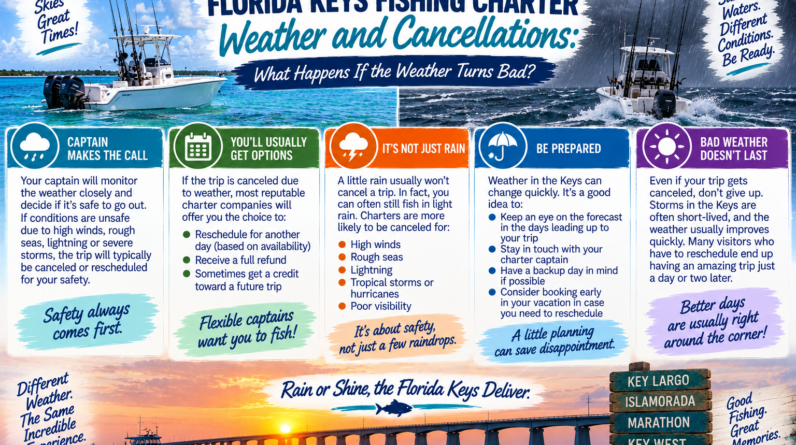
What If the Weather Is Bad?
The captain decides whether conditions are safe.
Bad weather doesn’t always mean the trip is canceled.
They might recommend:
- Fishing protected water
- Switching to the backcountry
- Delaying departure
- Changing fishing styles
- Rescheduling
Ask about the weather policy before you book.
Don’t assume you’ll automatically get a refund whenever conditions aren’t perfectly calm.
What If the Captain Cancels?
Review the charter’s policy before paying your deposit.
A weather cancellation handled by the captain may result in a refund or rescheduling, depending on the operator.
Policies vary.
Save the cancellation terms when you book.
Will You Definitely Catch Fish?
No.
A charter gives you an experienced captain, equipment and access to productive water.
It doesn’t give anyone control over wild fish.
Be suspicious of anyone promising a guaranteed trophy.
The captain’s job is to give you a legitimate opportunity.
The fish still get a vote.
Should Beginners Book a Private Charter or Party Boat?
Both can work.
A party boat is often cheaper, particularly for one or two anglers.
A private charter usually gives you:
- More personal attention
- More flexibility
- More privacy
- Greater input into target species
For a family or group of beginners, that additional attention can be valuable.
For a solo angler mainly interested in spending a few hours fishing, a party boat may offer better value.
What Type of Charter Should You Choose?
Before booking, decide what sounds most appealing.
Offshore Charter
Good if you want species such as:
- Sailfish
- Mahi-mahi
- Wahoo
- Tuna
Reef Charter
Good for:
- Snapper
- Mixed action
- Families
- Beginners
Backcountry Charter
Good for:
- Protected water
- Light tackle
- Families
- Variety
Flats Charter
Good for:
- Bonefish
- Permit
- Tarpon
- Fly fishing
- Sight-fishing
Don’t choose the boat first.
Choose the kind of fishing you want first.
Then find a captain who does that type of fishing regularly.
The official Florida Keys fishing directory is another place to see the variety of guide and charter options available from Key Largo through Key West.
Florida Keys Fishing Charter FAQ
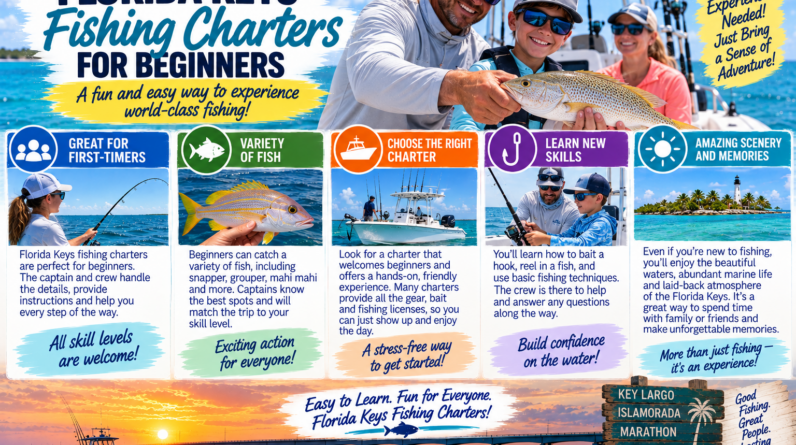
Do I need experience to go on a fishing charter?
No. Florida Keys charters regularly take beginners and families who have little or no fishing experience.
Do I need to bring my own rod?
Usually not. Most charter operators supply the fishing equipment required for the trip.
Do I need to bring bait?
Usually not. Ask whether bait is included when booking.
Do I need a fishing license?
Passengers aboard properly licensed saltwater charter vessels generally do not need to purchase their own recreational saltwater license for the charter trip.
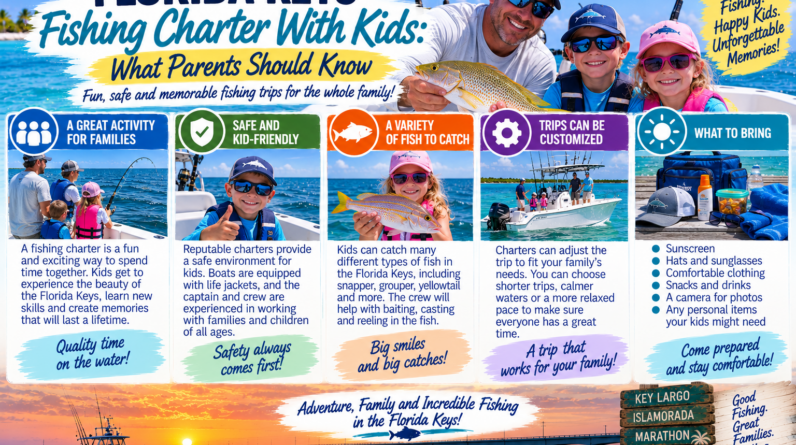
Can kids go on a fishing charter?
Yes. Many captains welcome families. Tell the captain your children’s ages so they can recommend an appropriate trip.
Can I keep the fish I catch?
Legal fish may be kept when current regulations and the charter’s policies allow it.
Will the charter clean my fish?
Many do, but ask before booking.
What if I get seasick?
Tell the captain as soon as you begin feeling sick. Private charters may have more flexibility to change plans or seek calmer water.
What if we don’t catch fish?
It happens. A good captain will usually try different areas, techniques or species when practical.
Do you tip a fishing charter?
Yes. Gratuity is customary for good service and is often not included in the advertised charter price.
How long should my first charter be?
Four hours can be a good introduction for beginners and families. Serious anglers and offshore fishermen may prefer six or eight hours.
What Should You Expect From Your First Florida Keys Fishing Charter?
Expect the captain and crew to handle most of the complicated parts.
They know the water.
They have the boat.
They have the equipment.
They have a plan.
Your job is much simpler.
Show up on time.
Listen to the crew.
Bring sun protection.
Ask questions.
Stay flexible about what you’re going to catch.
And when someone suddenly yells:
“Fish on!”
Grab the rod.
That’s the part you came for.