

Table of Contents
Florida Keys Blackfin Tuna Fishing: Best Time, Where to Go and How to Catch Them
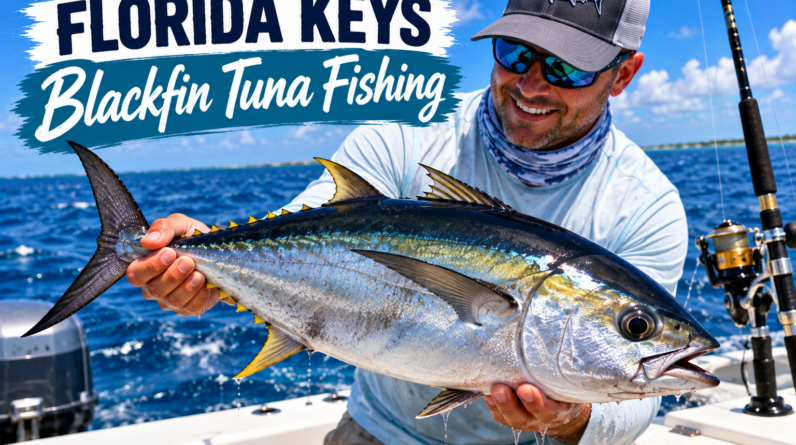
Florida Keys blackfin tuna fishing gives offshore anglers a chance to catch a fast, powerful tuna without traveling to distant bluefin or yellowfin grounds.
Blackfin tuna are smaller than some of their famous cousins.
They do not fight like small fish.
Hook one on reasonably light tackle and you will know very quickly that you are connected to a tuna.
Blackfin can be caught throughout the Florida Keys using live bait, trolling, chumming, jigging, and casting.
They are also excellent table fish.
If you want an offshore species that combines hard fights with the possibility of fresh tuna for dinner, blackfin deserve a spot on your Florida Keys fishing list.
Are Blackfin Tuna Common in the Florida Keys?
Yes.
Blackfin tuna are a regular offshore target around the Florida Keys.
FWC lists their habitat as coastal to offshore waters, and the Florida Keys fishing calendar lists blackfin tuna as a year-round fishing opportunity.
That does not mean fishing is equally good every month.
Conditions still matter.
Blackfin location and feeding activity can change with:
- Current
- Water temperature
- Bait
- Wind
- Weather
- Water clarity
- Season
One week a tuna area may be loaded with fish.
The next week the action may move.
What Is the Best Time for Florida Keys Blackfin Tuna Fishing?
You can catch blackfin tuna throughout the year in the Keys.
The official Florida Keys calendar lists them as year-round. FWC’s regional fishing guidance says fall through spring is a particularly useful window for blackfin tuna in the Keys.
That makes blackfin especially interesting because they overlap with several other offshore species.
During cooler months, a trip might also produce:
- Sailfish
- Wahoo
- King mackerel
During warmer periods, you may also have opportunities for:
- Mahi-mahi
- Other pelagic fish
If you are not building the entire trip around one species, blackfin can fit nicely into a mixed offshore day.
Can You Catch Blackfin Tuna in Summer?
Yes.
The Florida Keys tourism calendar lists blackfin tuna year-round.
Summer fishing can also put you around mahi-mahi and other warm-water offshore species.
That makes a mixed tuna and mahi trip possible when conditions line up.
Do not assume tuna are strictly a winter fish.
Where Do You Catch Blackfin Tuna in the Florida Keys?
Blackfin can be found around offshore areas that concentrate bait and current.
Possible places include:
- Offshore humps
- Current edges
- Drop-offs
- Deep reef edges
- Wrecks
- Areas holding schools of bait
- Open-water feeding zones
You are looking for food and water movement.
Find concentrated bait and predators may not be far behind.
Islamorada Blackfin Tuna Fishing
Islamorada is one of the best-known places in the Keys for blackfin tuna fishing.
One reason is the offshore hump system.
Underwater rises such as the Islamorada Hump can create current and concentrate bait.
That can attract:
- Blackfin tuna
- Bonito
- Sharks
- Other offshore predators
A captain may fish a hump using live bait, trolling, jigging, or other methods depending on conditions.
Read our Islamorada Fishing Guide if you are considering staying in the Upper Keys.
Key Largo Blackfin Tuna Fishing
Key Largo also gives you access to offshore Atlantic water.
That makes it possible to target tuna without driving farther down the Keys.
Key Largo can be particularly convenient if:
- You are coming from Miami
- You have a shorter trip
- You want to combine reef and offshore fishing
- You do not want to drive several more hours south
Use our Key Largo Fishing Guide for broader trip planning.
Marathon Blackfin Tuna Fishing
Marathon gives anglers access to offshore structure along with reefs, wrecks, and deep Atlantic water.
That creates plenty of flexibility.
A day might start looking for tuna and shift to:
- Mahi
- Reef fish
- Wreck fishing
- Other offshore targets
depending on what the captain sees.
Read our Marathon Fishing Guide.
Key West Blackfin Tuna Fishing
Blackfin tuna are also a possibility around Key West.
Key West works especially well for groups who want serious fishing without making fishing the only part of the vacation.
You can combine an offshore charter with:
- Restaurants
- Sightseeing
- Nightlife
- Beaches
- Other water activities
See our Key West Fishing Guide before deciding where to stay.
How Big Do Blackfin Tuna Get?
FWC says blackfin tuna are commonly around 28 inches.
They are much smaller than giant bluefin tuna.
Do not let that fool you.
Tuna are built to swim.
They have powerful bodies designed for speed and endurance.
A good blackfin on light tackle can make a long, hard run and keep you busy all the way back to the boat.
Blackfin Tuna vs. Bonito
These fish are often confused.
People may casually call several tuna-shaped fish “bonito.”
Blackfin tuna are their own species.
Atlantic bonito and little tunny are different fish.
Look closely before assuming what you caught.
FWC notes that blackfin have long pectoral fins that nearly reach the beginning of the second dorsal fin, along with dark finlets edged in white.
If you are fishing with a charter captain, identifying the fish should be easy.
How Do You Catch Blackfin Tuna?
There is no single technique.
Common methods include:
- Live baiting
- Trolling
- Chumming
- Jigging
- Casting artificial lures
- Fishing around offshore structure
The best method depends on what the fish are doing.
If tuna are crashing bait at the surface, casting may be exciting.
If fish are deeper, jigging may make more sense.
If they are scattered, trolling can help cover water.
Live Bait Fishing for Blackfin Tuna
Live bait can be extremely effective.
Possible baits include:
- Pilchards
- Sardines
- Other small live baitfish
A live bait that looks nervous and separated from the school can attract attention quickly.
Captains may also use live chum to get tuna feeding aggressively behind the boat.
When that works, fishing can become chaotic.
What Is Live Chumming?
Live chumming involves tossing live baitfish into the water to trigger feeding activity.
The bait begins swimming around the boat.
Predators move in.
Then anglers present hooked baits among the free-swimming fish.
If tuna are already nearby, this can turn a slow-looking patch of water into a feeding frenzy.
Trolling for Blackfin Tuna
Trolling lets the boat search for fish.
Possible trolling presentations include:
- Small feathers
- Tuna lures
- Rigged ballyhoo
- Other baitfish imitations
Trolling can be especially useful when you do not know exactly where the school is.
Once fish are found, the crew may switch tactics.
Jigging for Blackfin Tuna
Jigging can be a very effective way to target tuna holding deeper in the water column.
Heavy metal jigs can be dropped and worked vertically through the water.
This style of fishing can be physical.
You are repeatedly moving the jig and trying to trigger a reaction bite.
Then a tuna eats and tries to take the rod with it.
Topwater Blackfin Tuna Fishing
This may be one of the most entertaining ways to catch one.
If tuna are feeding near the surface, anglers may cast:
- Poppers
- Stickbaits
- Other surface lures
Watching a tuna smash a topwater bait is hard to beat.
The problem is that fish need to be near the surface and actively feeding.
You cannot force a topwater bite if the tuna are 200 feet down.
Birds Can Help You Find Tuna
Birds are worth watching offshore.
They are looking for food too.
If you see birds repeatedly:
- Diving
- Circling
- Hovering over one area
there may be bait being pushed toward the surface.
Predators such as tuna may be underneath.
One bird flying in a straight line does not mean much.
A group repeatedly working the same patch of ocean deserves attention.
Look for Bait on the Surface
Surface activity may include:
- Small fish spraying from the water
- Dark schools of bait
- Boiling water
- Fast-moving predators
- Diving birds
Good captains are constantly scanning.
Sometimes the signs disappear quickly.
Offshore fishing rewards people who pay attention.
What Tackle Do You Need for Blackfin Tuna?
Tackle depends on how you are fishing.
Possible setups include:
- Medium to medium-heavy spinning rods
- Conventional rods
- Braided main line
- Fluorocarbon leader
- Quality reels with smooth drags
Blackfin are strong enough that cheap equipment can become obvious very quickly.
A smooth drag matters.
Why Does Drag Matter So Much?
Tuna make strong runs.
If the drag sticks, you can break:
- Leader
- Main line
- Knots
If it is too loose, the fish may take far more line than necessary.
A quality reel gives you controlled pressure without sudden jerks.
On a charter, the crew should already have the appropriate tackle.
Do You Need Heavy Tackle?
Not always.
Part of the fun of blackfin fishing is catching them on relatively light tackle.
But there is a difference between light tackle and inadequate tackle.
You need enough line capacity and drag to handle a long run.
If sharks are around, landing fish efficiently can become even more important.
Sharks Can Be a Problem Around Tuna
Sharks know where the food is.
Areas that hold tuna may also hold sharks.
A hooked tuna can become an easy target.
Sometimes you get the whole fish back.
Sometimes you get part of it.
Sometimes the shark gets everything.
If sharks become too aggressive, a captain may decide it is better to move.
Blackfin Tuna Are Excellent Eating
Blackfin tuna are highly regarded as table fish.
They can be prepared in many ways.
Possible options include:
- Seared
- Grilled
- Sushi-style preparations when handled appropriately
- Poke
- Tuna steaks
- Other fresh tuna dishes
Good fish handling starts the moment the tuna reaches the boat.
Ice Blackfin Tuna Quickly
Tuna quality can deteriorate if fish stay warm.
If you plan to keep legal fish, proper icing matters.
Charter crews familiar with tuna should know how to:
- Bleed fish where appropriate
- Ice them
- Keep them cold
- Preserve meat quality
If taking tuna home matters to you, ask how the boat handles the catch before booking.
Can Restaurants Cook Your Blackfin Tuna?
Some Florida Keys restaurants offer cook-your-catch service.
Policies vary.
Call before showing up with a bag of fish.
Ask:
- Do you prepare customer-caught fish?
- Does it need to be cleaned first?
- Is there a minimum amount?
- How is it prepared?
- What does it cost?
Your charter captain may know nearby restaurants that regularly work with customers’ catches.
Will a Charter Clean Your Tuna?
Many charter operations clean legal fish after the trip.
Do not assume.
Ask before booking.
If bringing fish home is important, also ask about:
- Ice
- Bags
- Freezing
- Vacuum sealing
- Local processors
- Shipping
Planning this before fishing day is much easier than figuring it out in a marina parking lot with several pounds of tuna.
Can You Keep Blackfin Tuna in Florida?
Blackfin tuna rules are different from federally managed tunas such as bluefin, yellowfin, bigeye, albacore, and skipjack.
FWC currently treats tuna that are not federally regulated as unregulated species in Florida state waters. Florida’s default recreational rule for unregulated species is two fish or 100 pounds per person per day, whichever is greater.
Regulations can change, and the rules may differ depending on the species of tuna you actually catch.
Always identify the fish correctly and check current rules before keeping it.
Do You Need a Federal HMS Permit for Blackfin Tuna?
This is an important distinction.
NOAA’s federal Highly Migratory Species tuna rules focus on species such as bluefin and the BAYS group, which stands for bigeye, albacore, yellowfin, and skipjack. Blackfin tuna are not included in that federal tuna group.
That does not mean every fishing situation is permit-free.
If you are fishing aboard a charter, let the captain handle vessel permits and regulatory requirements.
If you are fishing from your own boat and targeting multiple tuna species, check the current FWC and NOAA requirements before leaving the dock.
Do You Need a Florida Fishing License?
Usually, unless an exemption applies.
Non-resident visitors age 16 and older generally need a Florida recreational saltwater fishing license when fishing independently.
Customers fishing aboard a properly licensed charter are generally covered by the charter operation.
That is one less thing most charter customers need to handle themselves.
Are Blackfin Tuna Good for Beginners?
Yes.
They can be a great offshore target for someone new to saltwater fishing.
You do not need to know how to:
- Find tuna
- Catch live bait
- Rig tackle
- Read a fish finder
- Identify offshore current
- Locate productive structure
The crew can handle that.
Your job is to fight the fish once the rod bends.
Are Blackfin Tuna Good for Kids?
They can be.
A smaller blackfin can be manageable with help.
But offshore conditions matter.
Think about:
- Seasickness
- Weather
- Trip length
- Child’s age
- Patience
- Fishing experience
A child who enjoys fishing may have a great time.
A younger child who needs constant action may prefer reef fishing for snapper.
Read our Florida Keys Fishing Charters With Kids guide if you are planning a family trip.
Half-Day or Full-Day Blackfin Tuna Charter?
Either can work.
A half-day may be enough when tuna are holding relatively close to the departure point and the captain has a good recent pattern.
A full day gives you more flexibility.
You have more time to:
- Search
- Move to another area
- Catch bait
- Switch techniques
- Target other offshore species
If blackfin are one of several species you would be happy catching, a full offshore day can give you plenty of options.
Blackfin Tuna vs. Mahi-Mahi
Both are popular offshore targets.
But the fishing can feel very different.
Blackfin Tuna
Often associated with:
- Humps
- Current
- Chumming
- Live bait
- Jigging
- Trolling
Mahi-Mahi
Often associated with:
- Weed lines
- Floating debris
- Birds
- Open-water searching
- Trolling
- Running and gunning
Your season may influence which species gets more attention.
Blackfin Tuna vs. Sailfish
These species overlap during parts of the cooler season.
A winter offshore trip might give you a chance at both.
Sailfish are more about:
- Jumps
- Billfish
- Live bait
- Kite fishing
- Catch-and-release sportfishing
Blackfin tuna offer:
- Powerful fights
- Different techniques
- Excellent table quality
Read our Florida Keys Sailfish Fishing guide if you are planning a winter trip.
Blackfin Tuna vs. Wahoo
Both fish are fast.
Very fast.
Wahoo have sharp teeth and are often targeted by trolling.
Blackfin give anglers more options with:
- Live bait
- Jigging
- Topwater
- Chumming
- Trolling
It is possible for both species to be part of the same cooler-season offshore trip.
Does a Full Moon Matter for Blackfin Tuna?
Moon phase can influence bait and feeding behavior, but it should not be treated as a guaranteed bite switch.
Current conditions matter more than a simplistic rule such as:
“Full moon means tuna.”
Pay closer attention to:
- Recent reports
- Bait
- Current
- Water temperature
- Weather
A captain fishing several days a week will usually have much more useful information than a generic moon chart.
Morning or Afternoon?
Either can produce fish.
Early morning may offer:
- Cooler temperatures
- Lower sun
- Comfortable summer conditions
Afternoon may line up better with:
- Current
- Tide
- Recent feeding patterns
If the captain recommends one window because of current fishing conditions, that advice is worth listening to.
What Should You Bring on a Tuna Charter?
The boat should provide fishing tackle unless told otherwise.
Bring:
- Polarized sunglasses
- Hat
- Sunscreen
- Lightweight sun shirt
- Water
- Snacks if not provided
- Light rain jacket
- Seasickness medication if appropriate
- Small cooler in the car if taking cleaned fish home
Do not bring your entire tackle collection unless the captain asks you to.
How Much Does a Blackfin Tuna Charter Cost?
Blackfin fishing generally falls into the offshore charter category.
Price depends on:
- Departure point
- Trip length
- Boat
- Captain
- Number of anglers
- Fishing style
Use our Florida Keys Fishing Charter Cost guide to set a realistic budget before calling captains.
Should You Book a Tuna-Specific Charter?
If blackfin are a bucket-list target, tell the captain.
Ask:
- Are blackfin being caught right now?
- What size fish are showing up?
- Where have you been finding them?
- Are you live baiting, trolling, or jigging?
- Would you recommend a half or full day?
- What would we target if the tuna bite is slow?
You want realistic answers.
A good captain will not promise something the ocean cannot guarantee.
Do Not Ignore Other Fish
One of the best things about offshore fishing in the Keys is variety.
You may leave the dock thinking about tuna and encounter:
- Mahi
- Sailfish
- Wahoo
- Kingfish
- Sharks
- Bonito
- Other offshore species
Stay flexible.
If the captain sees an opportunity that is better than the original plan, consider taking it.
Florida Keys Blackfin Tuna Fishing Gives You Options
Blackfin tuna do not require one rigid fishing method.
You can catch them:
- On live bait
- While trolling
- On jigs
- On topwater
- While chumming
They can be available throughout the year.
They fight hard.
And when harvest is legal, they can provide an excellent meal after the trip.
That makes blackfin one of the most versatile offshore fish to add to a Florida Keys vacation.
Plan Your Florida Keys Blackfin Tuna Fishing Trip
Start with the Florida Keys Fishing Calendar to compare blackfin tuna with the other species available during your travel dates.
For more species ideas, read our Florida Keys Fish Species guide.
If you are visiting during the cooler months, also read our Florida Keys Sailfish Fishing guide.
Then choose your destination:
For current regulations, check the FWC saltwater fishing regulations.
