

The 5 Best Fishing Knots For Salt Water Fishing The Keys And Beyond
There are many effective knots that can be used for saltwater fishing, and the best kn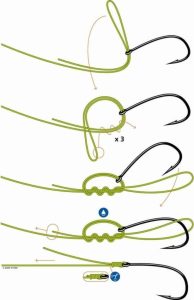 ot for a particular situation will depend on the specific type of fishing line and tackle being used, as well as the size and type of fish being targeted. Here are five popular knots that are widely used for saltwater fishing:
- Improved Clinch Knot: This is a strong and simple knot that is commonly used to tie a hook or lure to a fishing line. To tie an improved clinch knot, make five turns around the standing line, pass the end through the eye of the hook, then pass the end back through the small loop that forms next to the eye. Moisten the knot and pull it tight.
- Palomar Knot: This is a strong and reliable knot that is often used to tie a hook or lure to a fishing line. To tie a Palomar knot, double the fishing line and pass it through the eye of the hook, creating a loop. Tie an overhand knot with the loop, leaving a small bight on top. Pass the hook through the loop and pull it down to the eye of the hook. Moisten the knot and pull it tight.
- Uni Knot: This is a versatile knot that can be used to tie a variety of different types of tackle to a fishing line. To tie a Uni knot, make a loop in the fishing line and pass the end through the loop. Make six turns around the standing line and pass the end through the loop again. Moisten the knot and pull it tight.
- Surgeon’s Knot: This is a strong and secure knot that is often used to join two pieces of fishing line together. To tie a Surgeon’s knot, overlap the two ends of the fishing line and tie an overhand knot, leaving a small bight on top. Pass the end of one line through the bight and tie another overhand knot, pulling the ends tight.
- Blood Knot: This is a reliable knot that is often used to join two pieces of fishing line together or to attach a leader to a main line. To tie a Blood knot, overlap the two ends of the fishing line and tie an overhand knot, leaving a small loop on top. Pass the end of one line through the loop and wrap it around the standing line several times. Repeat the process with the other end of the line, pulling the knots tight.
It’s always a good idea to practice knot-tying before heading out on a fishing trip, and to choose the knot that is best suited for the specific fishing situation.